
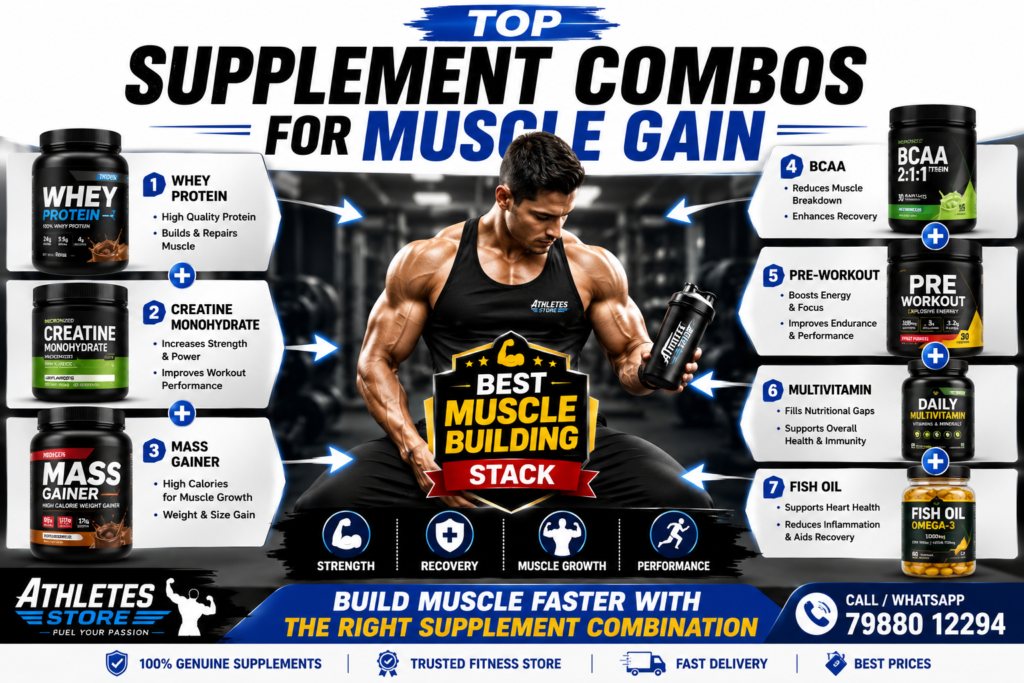
Building muscle requires more than just lifting heavy weights. Your workout routine, diet, recovery, and supplementation all play important roles in achieving lean muscle growth. While no supplement can replace proper nutrition and training, combining the right supplements can help improve performance, speed up recovery, and maximize muscle gains.
In this guide, we’ll explore the best supplement combinations for muscle gain, how they work together, and when to take them for the best results.
Why Combine Supplements?
Each supplement has a different purpose. Some increase strength, some improve recovery, while others help you meet your daily protein requirements. When used correctly, supplement combinations create a complete muscle-building system.
Benefits include:
- Faster muscle recovery
- Increased strength and power
- Better workout performance
- Improved muscle protein synthesis
- Enhanced endurance
- Greater lean muscle growth
Remember, supplements work best alongside a calorie surplus, resistance training, and sufficient sleep.
1. Whey Protein + Creatine (Best Overall Combo)
This is considered the gold standard for muscle gain.
Whey Protein
Whey protein provides essential amino acids, especially leucine, which triggers muscle protein synthesis after workouts.
Benefits:
- Supports muscle repair
- Promotes lean muscle growth
- Easy to digest
- Convenient protein source
Creatine Monohydrate
Creatine increases ATP production, allowing muscles to produce more energy during intense training.
Benefits:
- Improved strength
- Better workout performance
- Increased muscle size
- Faster recovery
Why They Work Together
After training, whey repairs damaged muscle fibers while creatine restores energy stores, making this combination highly effective for gaining lean muscle.
Best Time:
- Whey Protein: Immediately after workout
- Creatine: Post-workout or anytime daily (3–5 g)
2. Whey Protein + Oats + Peanut Butter
Perfect for hard gainers who struggle to consume enough calories.
This homemade muscle gain shake provides:
- High-quality protein
- Healthy fats
- Complex carbohydrates
Benefits:
- Higher calorie intake
- Sustained energy
- Better muscle recovery
- Healthy weight gain
Blend:
- 1 scoop whey protein
- 80 g oats
- 2 tablespoons peanut butter
- Banana
- Milk
This makes an excellent post-workout or breakfast shake.
3. Creatine + Pre-Workout
Ideal for strength athletes and heavy lifters.
Pre-Workout
Typically contains:
- Caffeine
- Citrulline
- Beta-Alanine
- Electrolytes
Benefits:
- Better focus
- More energy
- Improved blood flow
- Increased endurance
Combined with creatine, you’ll notice:
- More powerful workouts
- Better lifting performance
- Increased training volume
Take 20–30 minutes before training.
4. Whey Protein + BCAA (During Cutting)
If you’re dieting while trying to preserve muscle, this combination works well.
BCAA
Contains:
- Leucine
- Isoleucine
- Valine
Benefits:
- Reduces muscle breakdown
- Helps recovery
- Decreases muscle soreness
Although whey already contains BCAAs, extra BCAAs can be useful during long fasting periods or intense training while cutting.
5. Whey Protein + Fish Oil
Fish oil supports overall health and muscle recovery.
Benefits include:
- Reduced inflammation
- Faster recovery
- Better joint health
- Improved heart health
Omega-3 fatty acids may also improve muscle protein synthesis when combined with resistance training.
Recommended:
- 1–2 g EPA + DHA daily
6. Mass Gainer + Creatine
Best for skinny individuals who struggle to gain weight.
Mass gainers provide:
- High calories
- Protein
- Carbohydrates
- Vitamins
Adding creatine enhances:
- Strength
- Muscle fullness
- Workout intensity
Use only if you’re unable to meet calorie needs through regular food.
7. Protein + Multivitamin + Fish Oil
A simple daily stack for beginners.
This combination covers:
- Protein requirements
- Micronutrient deficiencies
- Healthy fats
Benefits:
- Better immunity
- Improved recovery
- Higher energy
- Overall health support
Sample Muscle Gain Supplement Schedule
Morning
- Multivitamin
- Fish Oil
Breakfast
- High-protein meal
30 Minutes Before Workout
- Pre-workout (optional)
Post Workout
- Whey Protein
- Creatine
Evening
- High-protein dinner
Before Bed
- Cottage cheese, Greek yogurt, or another protein-rich snack
Nutrition Still Comes First
Supplements only support your nutrition—they do not replace it.
For muscle gain, prioritize:
- Protein: 1.6–2.2 g per kg body weight
- Calories: 250–500 surplus
- Healthy fats
- Complex carbohydrates
- Plenty of water
Focus on whole foods like chicken, eggs, fish, milk, paneer, lentils, rice, oats, potatoes, fruits, and vegetables.
Common Mistakes to Avoid
- Taking too many supplements at once
- Ignoring your daily protein intake
- Skipping meals
- Expecting instant results
- Buying low-quality supplements
- Not training consistently
- Sleeping less than 7–8 hours
Consistency matters more than expensive supplement stacks.
Are Supplement Combos Safe?
For most healthy adults, supplements such as whey protein, creatine monohydrate, fish oil, and standard multivitamins are generally considered safe when used as directed. However, if you have kidney disease, liver disease, are pregnant, breastfeeding, or have another medical condition, consult a healthcare professional before using supplements.
Always buy products from reputable brands and follow the recommended serving sizes.
Final Thoughts
The best supplement combination for muscle gain depends on your goals, diet, and training routine. For most people, Whey Protein + Creatine offers the best balance of effectiveness, affordability, and scientific support. If your goal is maximum performance, adding a Pre-Workout can boost training intensity. For overall recovery and health, include Fish Oil and a Multivitamin.
Remember, supplements enhance your progress—they don’t replace disciplined training, balanced nutrition, adequate sleep, and consistency. Stay patient, follow a structured plan, and you’ll steadily build strength and lean muscle over time.
Disclaimer: This article is for educational purposes only and should not be considered medical advice. Consult a qualified healthcare professional before starting any new supplement regimen, especially if you have underlying health conditions or take prescription medications.