
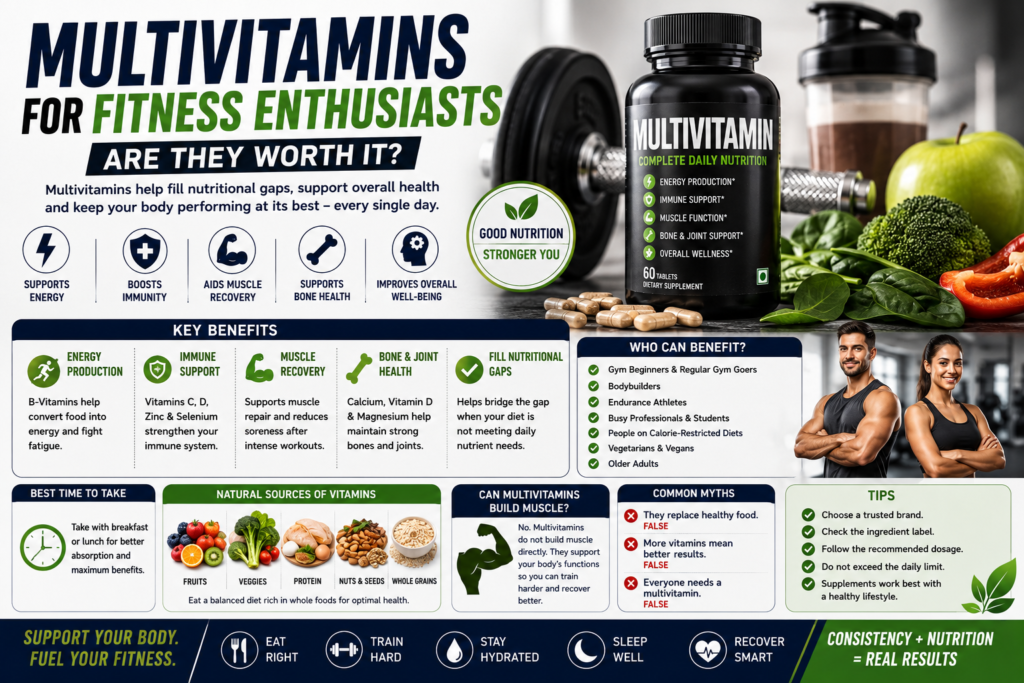
Whether you’re a beginner at the gym, a dedicated bodybuilder, a runner, or someone focused on maintaining a healthy lifestyle, you’ve probably seen multivitamins recommended alongside protein powders and other fitness supplements. But do you really need a multivitamin? Can it improve your workouts, or is it just another product with big marketing claims?
The truth is that multivitamins are not magic pills, but they can play an important role in supporting overall health and fitness. They help fill nutritional gaps, support immunity, promote energy production, and contribute to muscle recovery when your diet isn’t providing enough essential nutrients.
In this blog, we’ll explore what multivitamins are, their benefits, who should take them, and whether they’re worth adding to your fitness routine.
What Are Multivitamins?
Multivitamins are dietary supplements that contain a combination of essential vitamins and minerals. Depending on the brand, they may include:
- Vitamin A
- Vitamin C
- Vitamin D
- Vitamin E
- Vitamin K
- B-Complex Vitamins
- Calcium
- Magnesium
- Zinc
- Iron
- Selenium
- Copper
- Chromium
These nutrients support various bodily functions, including energy production, immune health, bone strength, muscle function, and overall wellness.
Why Fitness Enthusiasts Need Proper Nutrition
Exercise increases your body’s demand for nutrients. During workouts, your body uses vitamins and minerals to produce energy, repair muscles, and support recovery.
A balanced diet should always be your primary source of nutrition. However, factors like busy schedules, calorie-restricted diets, frequent travel, or intense training can make it difficult to meet all your nutritional needs through food alone.
This is where multivitamins may help bridge the gap.
Benefits of Multivitamins for Fitness Enthusiasts
1. Support Energy Production
Many vitamins, especially B-complex vitamins, help convert carbohydrates, fats, and proteins into usable energy.
Without adequate levels of these nutrients, you may experience fatigue and reduced workout performance.
2. Strengthen the Immune System
Intense training can temporarily stress the immune system.
Important nutrients like:
- Vitamin C
- Vitamin D
- Zinc
- Selenium
help support normal immune function and overall health.
A healthy immune system allows you to stay consistent with your training.
3. Promote Muscle Recovery
Exercise creates microscopic muscle damage that needs repair.
Nutrients such as:
- Vitamin D
- Magnesium
- Zinc
- Vitamin C
support recovery and tissue repair, helping your body recover after tough workouts.
4. Improve Bone Health
Strong bones are essential for lifting weights, running, and participating in sports.
Calcium and Vitamin D work together to maintain healthy bones and reduce the risk of injuries.
5. Support Muscle Function
Minerals like magnesium and potassium play important roles in muscle contraction and nerve function.
Adequate intake may help reduce muscle cramps and support normal muscle performance.
6. Fill Nutritional Gaps
Even healthy eaters may occasionally fall short on certain vitamins or minerals.
Multivitamins provide nutritional insurance by helping fill those gaps, especially during periods of increased physical activity.
Who Can Benefit from Multivitamins?
Multivitamins may be helpful for:
- Gym beginners
- Bodybuilders
- Endurance athletes
- Students
- Busy professionals
- People following calorie-restricted diets
- Vegetarians and vegans (depending on their diet)
- Older adults
However, individual needs vary, and not everyone requires a multivitamin.
Can Multivitamins Build Muscle?
No.
Multivitamins do not directly increase muscle size or strength.
Muscle growth primarily depends on:
- Progressive strength training
- Adequate protein intake
- Sufficient calories
- Proper recovery
- Quality sleep
Multivitamins simply help ensure your body has the nutrients needed to support these processes.
Do Multivitamins Increase Energy?
Multivitamins do not act like stimulants.
If you already have adequate vitamin and mineral levels, taking a multivitamin is unlikely to make you feel more energetic.
However, if you have a nutrient deficiency, correcting it may improve energy levels and overall well-being.
Best Time to Take Multivitamins
Most multivitamins are best taken:
- With breakfast
- With lunch
Taking them with food can improve absorption and reduce the chance of stomach discomfort.
Avoid taking them on an empty stomach unless directed otherwise.
Can You Take Multivitamins with Other Supplements?
Yes.
Many fitness enthusiasts combine multivitamins with:
- Whey Protein
- Creatine Monohydrate
- Fish Oil
- Electrolytes
- Protein Bars
- BCAAs (if appropriate)
However, avoid taking multiple products that contain the same vitamins or minerals in high amounts, as excessive intake can be harmful.
Signs You May Need More Vitamins or Minerals
Some possible signs of nutrient deficiencies include:
- Constant fatigue
- Poor workout recovery
- Frequent illness
- Muscle cramps
- Weak nails
- Hair thinning
- Low energy
- Slow wound healing
These symptoms can have many causes, so consult a healthcare professional for proper evaluation if they persist.
Natural Food Sources of Vitamins
A multivitamin should complement—not replace—a healthy diet.
Include foods such as:
Fruits
- Oranges
- Bananas
- Apples
- Berries
Vegetables
- Spinach
- Broccoli
- Carrots
- Bell peppers
Protein Sources
- Eggs
- Chicken
- Fish
- Paneer
- Greek yogurt
Healthy Fats
- Almonds
- Walnuts
- Seeds
- Olive oil
Whole Grains
- Oats
- Brown rice
- Whole wheat
A colorful, balanced diet is one of the best ways to meet your nutrient needs.
Common Myths About Multivitamins
Myth 1: Multivitamins Replace Healthy Food
False.
Whole foods provide fiber, antioxidants, and many beneficial compounds that supplements cannot fully replace.
Myth 2: More Vitamins Mean Better Results
False.
Taking excessive amounts of vitamins and minerals can be harmful. Always follow the recommended serving size.
Myth 3: Everyone Needs a Multivitamin
False.
People who eat a well-balanced diet may already meet most of their nutritional needs without supplementation.
Tips for Choosing a Good Multivitamin
When shopping for a multivitamin:
- Choose a trusted brand.
- Look for transparent ingredient labels.
- Avoid unnecessary fillers.
- Check for appropriate vitamin and mineral levels.
- Buy from reliable stores to ensure authenticity.
Are Multivitamins Worth It?
For many fitness enthusiasts, yes—but with realistic expectations.
If your diet is inconsistent or you’re training intensely, a quality multivitamin can help fill nutritional gaps and support overall health. However, it is not a substitute for balanced meals, proper hydration, exercise, and sleep.
Think of a multivitamin as a nutritional backup rather than a performance enhancer.
Final Thoughts
Multivitamins can be a valuable addition to a fitness routine, especially for individuals who struggle to meet their daily vitamin and mineral needs through food alone. They support energy metabolism, immune function, muscle recovery, bone health, and overall wellness, making them a practical supplement for many active people.
That said, the foundation of good health and fitness will always be a balanced diet rich in whole foods, consistent exercise, proper hydration, and adequate rest. If you choose to use a multivitamin, select a reputable product, follow the recommended dosage, and remember that supplements work best when combined with healthy lifestyle habits.
By focusing on smart nutrition and consistent training, you’ll be well on your way to achieving your fitness goals while supporting your long-term health.