Water is one of the most essential nutrients for the human body, yet it is often overlooked in fitness routines. Whether you’re lifting weights, running, cycling, or playing sports, staying properly hydrated directly impacts your performance, recovery, and overall health. Even mild dehydration can reduce strength, endurance, focus, and energy levels, making your workouts less effective.
In this guide, you’ll learn why hydration is important, how much water you should drink, the signs of dehydration, and practical hydration tips to help you perform at your best.
Why Hydration Matters During Exercise
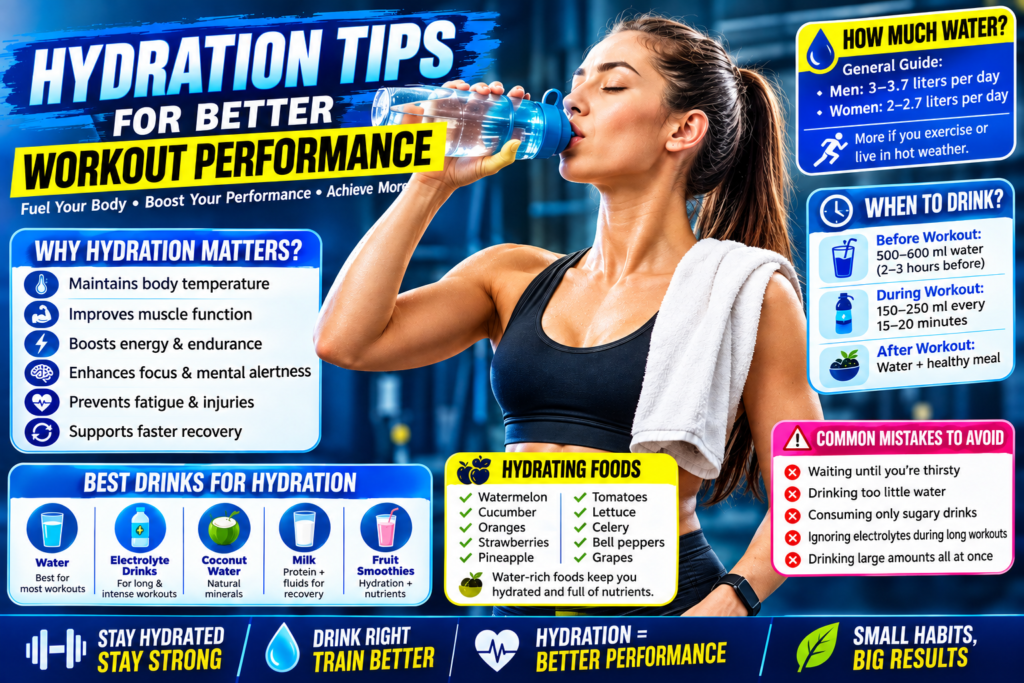
Your body is made up of about 60% water, and nearly every bodily function depends on adequate hydration. During exercise, you lose water and electrolytes through sweat. If these fluids aren’t replaced, dehydration can occur, affecting your physical and mental performance.
Proper hydration helps:
- Maintain body temperature
- Lubricate joints
- Transport nutrients to muscles
- Deliver oxygen throughout the body
- Improve muscle function
- Prevent fatigue
- Enhance recovery
Simply put, hydration is just as important as your workout routine.
How Dehydration Affects Workout Performance
Even losing 2% of your body weight through sweat can significantly reduce performance.
Common effects of dehydration include:
- Reduced endurance
- Muscle cramps
- Faster fatigue
- Increased heart rate
- Poor concentration
- Headaches
- Dizziness
- Slower recovery
- Higher risk of heat exhaustion
These issues can prevent you from reaching your fitness goals.
Signs You Need More Water
Watch for these warning signs:
- Dry mouth
- Dark yellow urine
- Feeling thirsty
- Muscle cramps
- Low energy
- Headache
- Dry skin
- Rapid heartbeat
- Poor workout performance
- Difficulty concentrating
If you notice these symptoms, increase your fluid intake.
How Much Water Should You Drink?
Hydration needs vary based on age, body size, activity level, and climate.
General recommendations:
- Men: 3–3.7 liters per day
- Women: 2–2.7 liters per day
If you exercise regularly, you’ll likely need more water to replace fluids lost through sweat.
Hydration Before Your Workout
Starting your workout well-hydrated improves performance from the very beginning.
Aim to:
- Drink 500–600 ml of water about 2–3 hours before exercise.
- Drink another 200–300 ml around 20–30 minutes before your workout.
Avoid waiting until you feel thirsty, as thirst is often a late sign of dehydration.
Hydration During Exercise
While exercising, replace fluids regularly.
General guideline:
- Drink 150–250 ml of water every 15–20 minutes, especially during moderate to intense workouts.
If your workout lasts longer than an hour or takes place in hot weather, consider drinks that contain electrolytes.
Hydration After Exercise
Post-workout hydration is essential for recovery.
After your workout:
- Drink water gradually over the next few hours.
- Replace fluids lost through sweat.
- Pair hydration with a balanced meal containing protein and carbohydrates.
A simple way to estimate fluid loss is to weigh yourself before and after exercise. The weight lost is mostly water that should be replaced.
Best Drinks for Hydration
1. Water
The best choice for most workouts under one hour.
Benefits:
- Zero calories
- Readily available
- Supports all body functions
2. Electrolyte Drinks
Useful for:
- Long workouts
- High-intensity training
- Endurance sports
- Hot weather
They replace sodium, potassium, and other minerals lost through sweat.
3. Coconut Water
A natural source of electrolytes and potassium.
Great for light to moderate workouts.
4. Milk
Low-fat milk is excellent after workouts because it provides:
- Protein
- Calcium
- Carbohydrates
- Fluids
5. Homemade Fruit Smoothies
Smoothies made with fruits, yogurt, and milk provide hydration along with nutrients and energy.
Foods That Help You Stay Hydrated
Many fruits and vegetables contain high amounts of water.
Excellent choices include:
- Watermelon
- Cucumber
- Oranges
- Strawberries
- Pineapple
- Tomatoes
- Lettuce
- Celery
- Bell peppers
- Grapes
These foods also supply vitamins, minerals, and antioxidants.
Electrolytes: Why They Matter
Electrolytes help regulate:
- Muscle contractions
- Nerve function
- Fluid balance
- Heart rhythm
Important electrolytes include:
- Sodium
- Potassium
- Magnesium
- Calcium
Heavy sweaters and endurance athletes may benefit from replenishing these minerals during prolonged exercise.
Hydration Tips for Different Types of Workouts
Strength Training
- Drink water before and during your session.
- Stay hydrated between sets.
- Consume water after lifting.
Running
- Drink regularly during long runs.
- Use electrolyte drinks for runs lasting over an hour.
Cycling
Carry a water bottle and sip frequently, especially on outdoor rides.
HIIT Workouts
High-intensity exercise increases sweat loss, so hydration before and after is especially important.
Yoga
Even low-intensity workouts can cause dehydration, particularly in heated classes.
Common Hydration Mistakes
Avoid these common errors:
- Waiting until you’re thirsty
- Drinking too little throughout the day
- Consuming excessive sugary drinks
- Ignoring electrolytes during long workouts
- Drinking large amounts all at once instead of consistently
- Replacing water with energy drinks unnecessarily
Consistency is key.
Can You Drink Too Much Water?
Yes. Drinking excessive amounts of water in a short period can lead to hyponatremia, a condition where sodium levels become dangerously low.
To avoid this:
- Drink according to your thirst and activity level.
- Use electrolyte drinks during prolonged exercise if needed.
- Avoid forcing excessive amounts of water.
Balance is important.
Daily Hydration Tips
Make hydration part of your routine:
- Carry a reusable water bottle.
- Drink a glass of water after waking up.
- Sip water throughout the day.
- Drink before, during, and after workouts.
- Eat water-rich fruits and vegetables.
- Monitor urine color—light yellow usually indicates good hydration.
- Set reminders if you often forget to drink water.
Sample Hydration Schedule
Morning
- 1 glass of water after waking
Breakfast
- Water or milk
Mid-Morning
- Water bottle refill
Before Workout
- 500–600 ml water
During Workout
- 150–250 ml every 15–20 minutes
After Workout
- Water plus a protein-rich meal
Evening
- Continue sipping water regularly
This routine helps maintain hydration throughout the day.
Final Thoughts
Hydration is a simple but powerful tool for improving workout performance, endurance, strength, and recovery. Drinking enough water before, during, and after exercise helps regulate body temperature, support muscle function, and reduce fatigue. Pairing good hydration habits with a balanced diet and consistent training allows you to perform at your best and recover more effectively.
Remember, don’t wait until you’re thirsty. Make hydration a daily habit, listen to your body’s signals, and fuel your workouts with the water and nutrients your body needs. Staying hydrated today will help you build a stronger, healthier, and more active tomorrow.