
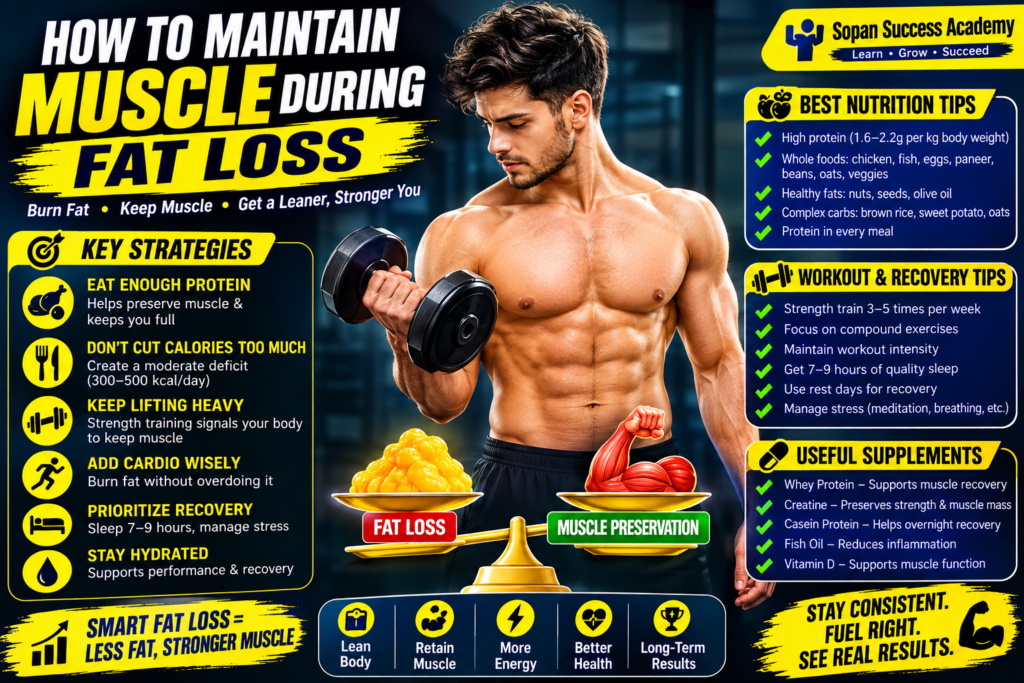
Losing body fat while preserving muscle is one of the biggest challenges in any fitness journey. Many people focus only on reducing calories and doing endless cardio, only to find themselves losing strength and muscle along with fat. The key to achieving a lean, toned physique is maintaining your hard-earned muscle while reducing body fat.
The good news is that with the right combination of nutrition, strength training, recovery, and consistency, you can successfully burn fat without sacrificing muscle. In this guide, you’ll learn the best strategies to maintain muscle during fat loss and improve your overall fitness results.
Why Muscle Preservation Matters
Muscle is metabolically active tissue, meaning it burns more calories than fat, even while you’re resting. Preserving muscle during a fat-loss phase helps you:
- Maintain strength
- Improve metabolism
- Achieve a lean and defined physique
- Increase workout performance
- Reduce the risk of injury
- Prevent weight regain
Losing muscle can slow your metabolism and make it harder to maintain your weight in the long run.
Why Muscle Loss Happens During Fat Loss
When you consume fewer calories than your body needs, it uses stored fat for energy. However, if your calorie deficit is too large or your protein intake is too low, your body may also break down muscle tissue for energy.
Common causes of muscle loss include:
- Eating too few calories
- Low protein intake
- Excessive cardio
- Skipping strength training
- Poor sleep
- Overtraining
- Rapid weight loss
Understanding these factors is the first step to preventing muscle loss.
1. Eat Enough Protein
Protein is the most important nutrient for maintaining muscle during fat loss. It provides the amino acids needed to repair and preserve muscle tissue.
Excellent protein sources include:
- Chicken breast
- Turkey
- Fish
- Eggs
- Greek yogurt
- Cottage cheese
- Paneer
- Tofu
- Lentils
- Whey protein
Aim to include protein in every meal and snack throughout the day.
2. Don’t Cut Calories Too Aggressively
A moderate calorie deficit helps burn fat while preserving muscle.
Instead of drastically reducing your food intake, aim for a gradual calorie deficit. Losing weight too quickly increases the risk of muscle loss and may reduce workout performance.
Steady, sustainable fat loss is more effective than crash dieting.
3. Continue Strength Training
One of the biggest mistakes during fat loss is replacing weight training with excessive cardio.
Strength training signals your body that muscle is still needed.
Focus on:
- Compound exercises
- Progressive overload
- Proper form
- Full-body workouts
- Consistent training schedule
Exercises like squats, deadlifts, bench presses, rows, shoulder presses, and pull-ups are highly effective.
4. Lift Heavy Enough
Many people switch to very light weights during a fat-loss phase.
Instead, continue lifting challenging weights while maintaining good form.
Heavy resistance helps preserve muscle mass by keeping muscles stimulated.
Reduce training volume if needed, but maintain workout intensity.
5. Include Cardio Wisely
Cardio supports fat loss but shouldn’t replace resistance training.
Good options include:
- Walking
- Cycling
- Jogging
- HIIT (1–2 sessions weekly)
Avoid excessive daily cardio that interferes with recovery or causes muscle breakdown.
6. Prioritize Recovery
Muscles grow and recover outside the gym.
Recovery strategies include:
- 7–9 hours of sleep
- Rest days
- Stretching
- Hydration
- Stress management
Poor recovery increases muscle loss and reduces workout performance.
7. Stay Hydrated
Water supports:
- Muscle contractions
- Nutrient transport
- Joint lubrication
- Recovery
- Workout performance
Drink water consistently throughout the day, especially before, during, and after workouts.
8. Spread Protein Throughout the Day
Instead of eating all your protein in one meal, distribute it across multiple meals.
Example:
- Breakfast
- Lunch
- Post-workout
- Dinner
- Evening snack
This helps maximize muscle protein synthesis throughout the day.
9. Don’t Skip Post-Workout Nutrition
After training, your muscles are ready to absorb nutrients.
A balanced post-workout meal should include:
- Lean protein
- Complex carbohydrates
- Water
Examples:
- Chicken with rice
- Eggs and toast
- Greek yogurt with fruit
- Whey protein with a banana
This supports muscle recovery and replenishes energy stores.
10. Manage Stress
High stress increases cortisol levels.
Chronically elevated cortisol may:
- Increase muscle breakdown
- Slow recovery
- Affect sleep
- Increase cravings
Reduce stress through:
- Meditation
- Walking
- Reading
- Deep breathing
- Spending time outdoors
Best Supplements for Muscle Preservation
Supplements can support your diet but should never replace whole foods.
Whey Protein
Helps meet daily protein requirements and supports muscle recovery.
Creatine Monohydrate
One of the most researched supplements.
Benefits include:
- Preserves strength
- Supports muscle mass
- Improves workout performance
Take 3–5 grams daily.
Casein Protein
A slow-digesting protein that may help support overnight muscle recovery.
Fish Oil
Supports recovery and helps reduce inflammation.
Vitamin D
Important for muscle function, especially if you have low vitamin D levels.
Foods That Support Muscle Maintenance
Build your meals around nutrient-rich foods such as:
- Chicken
- Fish
- Eggs
- Lean beef
- Paneer
- Greek yogurt
- Brown rice
- Sweet potatoes
- Oats
- Fruits
- Vegetables
- Nuts
- Olive oil
- Beans
A balanced diet provides energy while supporting muscle preservation.
Common Mistakes to Avoid
Many people unintentionally lose muscle because of these mistakes:
- Eating too little protein
- Skipping weight training
- Excessive cardio
- Poor sleep
- Rapid weight loss
- Ignoring recovery
- Inconsistent workouts
- Following fad diets
Avoiding these habits can help you maintain strength and muscle throughout your fat-loss journey.
Sample Daily Plan
Breakfast
Oatmeal with Greek yogurt and berries
Mid-Morning Snack
Boiled eggs and almonds
Lunch
Grilled chicken, brown rice, and vegetables
Pre-Workout
Banana with peanut butter
Post-Workout
Whey protein shake and a banana
Dinner
Salmon or paneer with sweet potatoes and broccoli
Before Bed
Cottage cheese or a glass of milk
This meal plan provides balanced nutrition to support fat loss while preserving muscle.
Final Thoughts
Maintaining muscle during fat loss requires a smart and balanced approach. Instead of focusing only on the number on the scale, prioritize preserving lean muscle through adequate protein intake, regular strength training, moderate calorie reduction, proper hydration, quality sleep, and consistent recovery.
Remember, fat loss is not about becoming smaller—it’s about becoming stronger, healthier, and leaner. By combining resistance training with nutritious meals and sustainable habits, you can lose body fat while keeping the muscle you’ve worked so hard to build. Stay patient, stay consistent, and trust the process. Your body will reward you with lasting results and improved overall fitness