
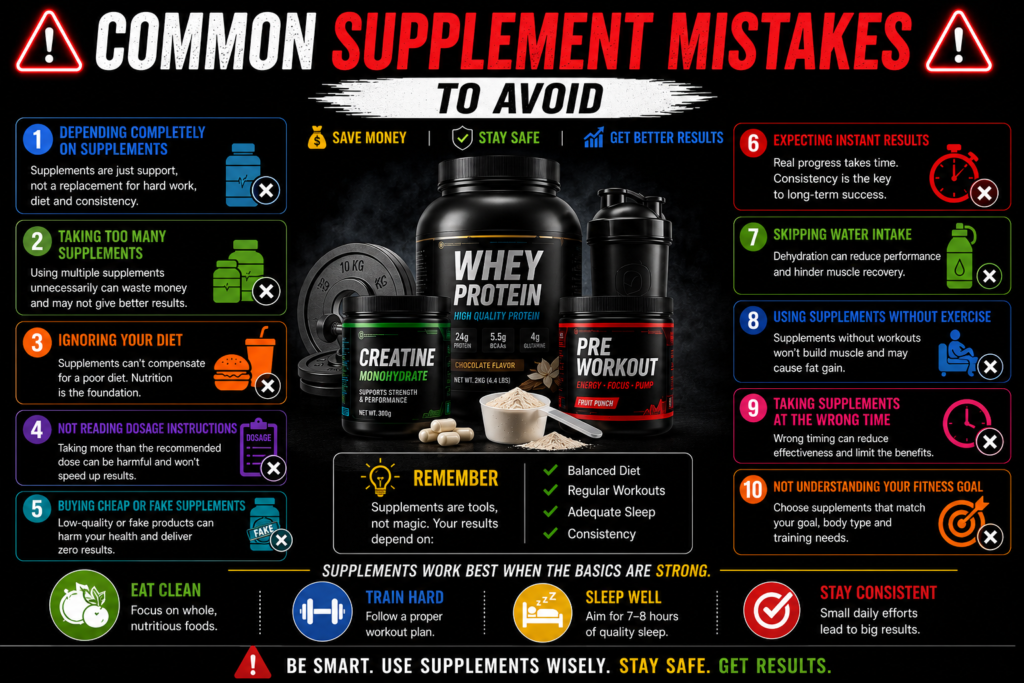
Fitness supplements have become extremely popular among gym-goers, athletes, and beginners who want faster results. Products like whey protein, creatine, pre-workout, BCAAs, and mass gainers can support muscle growth, improve performance, and enhance recovery when used correctly. However, many people make common supplement mistakes that not only waste money but can also slow down progress.
The truth is that supplements are meant to support a healthy diet and training program — not replace them. Unfortunately, beginners often depend too much on supplements without understanding how they actually work. In this blog, we will discuss the most common supplement mistakes and how to avoid them for better fitness results.
1. Depending Completely on Supplements
One of the biggest mistakes people make is believing supplements alone will transform their bodies. Many beginners think drinking protein shakes or taking pre-workouts will automatically build muscle.
In reality, supplements only assist your fitness journey. Proper workouts, balanced nutrition, sleep, and consistency are still the most important factors.
What to Do Instead:
Focus on:
- Eating nutritious whole foods
- Following a proper workout routine
- Getting enough rest
- Using supplements only as support
Remember, no supplement can replace hard work and discipline.
2. Taking Too Many Supplements Together
Many beginners start taking multiple supplements at once without understanding their purpose. For example:
- Whey protein
- Creatine
- Pre-workout
- Fat burners
- BCAAs
- Mass gainers
Using too many products unnecessarily can confuse your body and your budget.
What to Do Instead:
Start with basic supplements only if needed:
- Whey protein for protein intake
- Creatine for strength and muscle growth
- Multivitamins if your diet lacks nutrients
Keep things simple in the beginning.
3. Ignoring Your Diet
This is one of the most common and damaging mistakes. Some people consume supplements regularly but continue eating junk food and unhealthy meals.
Supplements cannot compensate for poor eating habits.
What to Do Instead:
Build your diet around:
- Protein-rich foods
- Healthy carbohydrates
- Good fats
- Fruits and vegetables
- Plenty of water
A strong diet foundation always delivers better results than relying on supplements alone.
4. Not Reading the Dosage Instructions
Many people assume that taking larger amounts of supplements will produce faster results. This is false and sometimes dangerous.
For example:
- Excess pre-workout may increase heart rate
- Too much creatine can cause digestive discomfort
- Overusing mass gainers may lead to fat gain.
What to Do Instead:
Always follow recommended dosages mentioned on the label or suggested by a fitness expert.
More is not always better.
5. Buying Cheap or Fake Supplements
The supplement market is filled with counterfeit and low-quality products. Many people buy cheap supplements from unreliable sources to save money.
Fake supplements may:
- Contain harmful ingredients
- Provide poor-quality protein
- Cause health problems
- Deliver no real results
What to Do Instead:
Buy supplements only from:
- Trusted brands
- Official websites
- Authorized stores
Check product reviews and authenticity before purchasing.
6. Expecting Instant Results
Many beginners become impatient after using supplements for only a few weeks. They expect dramatic transformations quickly and lose motivation when results take time.
Fitness is a long-term process.
What to Do Instead:
Stay consistent with:
- Training
- Diet
- Sleep
- Supplement use
Visible changes often take several months of dedication.
7. Skipping Water Intake
Certain supplements like creatine, require proper hydration. Many people increase supplement intake but forget to drink enough water.
Dehydration can affect:
- Muscle recovery
- Workout performance
- Energy levels
What to Do Instead:
Drink at least 3–4 liters of water daily, especially if you train intensely.
8. Using Supplements Without Exercise
Some individuals consume mass gainers or protein shakes without following any workout routine. This often leads to unwanted fat gain instead of muscle growth.
What to Do Instead:
Combine supplements with:
- Strength training
- Cardio
- Active lifestyle habits
Supplements work best when paired with exercise.
9. Taking Supplements at the Wrong Time
Timing also matters for certain supplements.
For example:
- Whey protein works well after workouts.
- Pre-workout should be taken before exercise.
- Creatine should be taken consistently daily.
Using supplements incorrectly may reduce their effectiveness.
What to Do Instead:
Learn the correct timing for each supplement and follow it consistently.
10. Not Understanding Your Fitness Goal
Different goals require different supplements.
For example:
- Fat loss goals may need whey protein.
- Weight gain goals may need mass gainers.
- Strength goals may benefit from creatine.
Many people buy supplements simply because others are using them.
What to Do Instead:
Choose supplements according to your:
- Body type
- Fitness goals
- Diet needs
- Workout intensity
Personalized choices always work better.
Are Supplements Necessary for Beginners?
Not always. Beginners can achieve excellent results with:
- Healthy eating
- Proper workouts
- Good sleep
- Consistency
Supplements become useful when your diet lacks certain nutrients or when you need convenience.
For example:
- Whey protein helps meet protein goals.
- Creatine supports strength and recovery.
- Multivitamins help cover nutrient deficiencies.
But remember, supplements are optional tools — not magic solutions.
Conclusion
Supplements can be effective for improving fitness results, but only when used correctly. The biggest mistake people make is depending too much on products while ignoring the basics like nutrition, training, hydration, and sleep.
Avoiding common supplement mistakes can save you money, improve your results, and protect your health. Start simple, focus on consistency, and always prioritize whole foods and proper exercise over shortcuts.
Fitness success does not come from the number of supplements you take. It comes from discipline, patience, and smart habits repeated every day.