
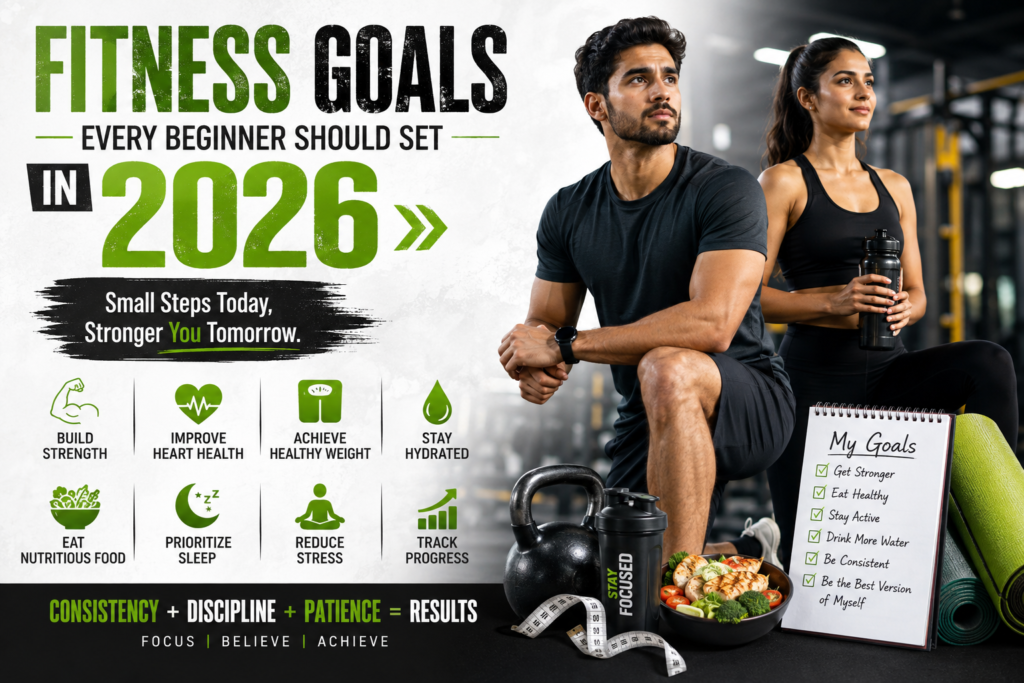
Starting a fitness journey can feel exciting, but it can also be confusing. With countless workout plans, diet trends, and fitness influencers online, beginners often struggle to decide where to begin. The truth is that success in fitness doesn’t come from following every trend—it comes from setting realistic, measurable, and achievable goals.
In 2026, fitness is no longer just about losing weight or building muscles. It is about improving overall health, increasing energy, reducing stress, and creating a sustainable lifestyle. Whether you’re joining a gym for the first time, working out at home, or starting outdoor activities, having clear fitness goals will help you stay motivated and consistent.
1. Build a Consistent Workout Routine
Consistency is the foundation of every successful fitness journey. Instead of aiming for intense workouts every day, focus on creating a routine you can maintain.
A good beginner schedule includes:
- Strength training: 2–3 days per week
- Cardio: 2–3 days per week
- Stretching or mobility exercises: Daily for 10–15 minutes
- Rest days: 1–2 days per week
Remember, exercising three days every week for six months is far more effective than exercising every day for one week and quitting.
2. Improve Overall Strength
Strength isn’t only for bodybuilders. Building muscle helps improve posture, increase metabolism, strengthen bones, and reduce the risk of injuries.
Begin with basic compound exercises such as:
- Squats
- Push-ups
- Lunges
- Dumbbell rows
- Shoulder press
- Planks
Focus on learning proper form before increasing weight. Gradually add resistance as your body becomes stronger.
3. Increase Daily Physical Activity
Many beginners think only gym workouts matter, but daily movement is equally important.
Simple ways to stay active include:
- Walk 8,000–10,000 steps daily.
- Use stairs instead of elevators.
- Take short walking breaks during work.
- Ride a bicycle whenever possible.
- Stretch every hour if you have a desk job.
These small habits burn extra calories and improve heart health.
4. Set a Healthy Weight Goal
Rather than chasing rapid weight loss, aim for slow and sustainable progress.
Healthy targets include:
- Losing 0.5–1 kg per week
- Reducing body fat gradually
- Increasing lean muscle mass
- Improving waist measurements
The number on the weighing scale is only one indicator of progress. Pay attention to how your clothes fit, your energy levels, and your strength improvements.
5. Eat More Protein
Nutrition is just as important as exercise. Protein supports muscle recovery, keeps you full longer, and helps preserve lean muscle while losing fat.
Excellent protein sources include:
- Eggs
- Chicken breast
- Fish
- Paneer
- Greek yogurt
- Milk
- Lentils
- Chickpeas
- Soy products
- Whey protein (if required)
Aim to include protein in every meal for better results.
6. Stay Hydrated
Water plays a crucial role in performance and recovery.
Benefits of proper hydration include:
- Better workouts
- Improved digestion
- Faster recovery
- Healthy skin
- Reduced fatigue
Most adults should aim for around 2–3 liters of water daily, increasing intake during hot weather or intense exercise.
7. Improve Cardiovascular Fitness
A healthy heart is essential for overall wellness.
Beginners can start with:
- Brisk walking
- Cycling
- Swimming
- Jogging
- Skipping rope
Try to complete at least 150 minutes of moderate-intensity cardio every week.
8. Prioritize Sleep and Recovery
Muscles don’t grow while you’re exercising—they grow while you’re recovering.
Adults should aim for:
- 7–9 hours of quality sleep
- Regular sleep schedule
- Limited screen time before bed
- Stress management through meditation or breathing exercises
Proper recovery helps improve performance and reduces injury risk.
9. Improve Flexibility and Mobility
Flexible muscles improve movement, posture, and workout performance while lowering the risk of injury.
Spend 10–15 minutes daily on:
- Hamstring stretches
- Hip mobility drills
- Shoulder mobility exercises
- Yoga
- Foam rolling
These exercises make everyday movements easier and improve long-term health.
10. Track Your Progress
Tracking progress keeps you motivated and helps identify what’s working.
You can monitor:
- Body weight
- Body measurements
- Progress photos
- Workout performance
- Daily steps
- Sleep quality
- Water intake
Seeing small improvements over time builds confidence and encourages consistency.
11. Develop Healthy Eating Habits
Avoid crash diets and focus on balanced nutrition.
Your plate should include:
- Lean protein
- Whole grains
- Fruits
- Vegetables
- Healthy fats
- Plenty of water
Limit sugary drinks, processed snacks, and excessive fast food without completely eliminating your favorite foods. Moderation is key.
12. Stay Mentally Strong
Fitness is as much about mental health as physical health.
Regular exercise helps:
- Reduce stress
- Improve mood
- Increase confidence
- Boost focus
- Enhance sleep quality
Celebrate every milestone, whether it’s completing your first workout or lifting a heavier weight.
Common Mistakes Beginners Should Avoid
Many beginners lose motivation because they expect instant results.
Avoid these common mistakes:
- Comparing yourself with others
- Skipping warm-ups
- Overtraining
- Ignoring nutrition
- Sleeping too little
- Following extreme diets
- Changing workout plans too often
- Giving up after a few weeks
Consistency always beats perfection.
Sample Weekly Fitness Plan
Monday: Full-body strength training
Tuesday: 30-minute brisk walk + stretching
Wednesday: Upper body workout
Thursday: Cardio and core exercises
Friday: Lower body strength training
Saturday: Yoga or light cycling
Sunday: Rest and recovery
This simple routine is ideal for beginners and can be adjusted based on individual fitness levels.
Final Thoughts
Beginning your fitness journey in 2026 is one of the best investments you can make in your health. Instead of aiming for unrealistic transformations, focus on building sustainable habits that you can maintain for years. Set achievable goals, exercise consistently, eat nutritious foods, stay hydrated, prioritize sleep, and celebrate every improvement along the way.