
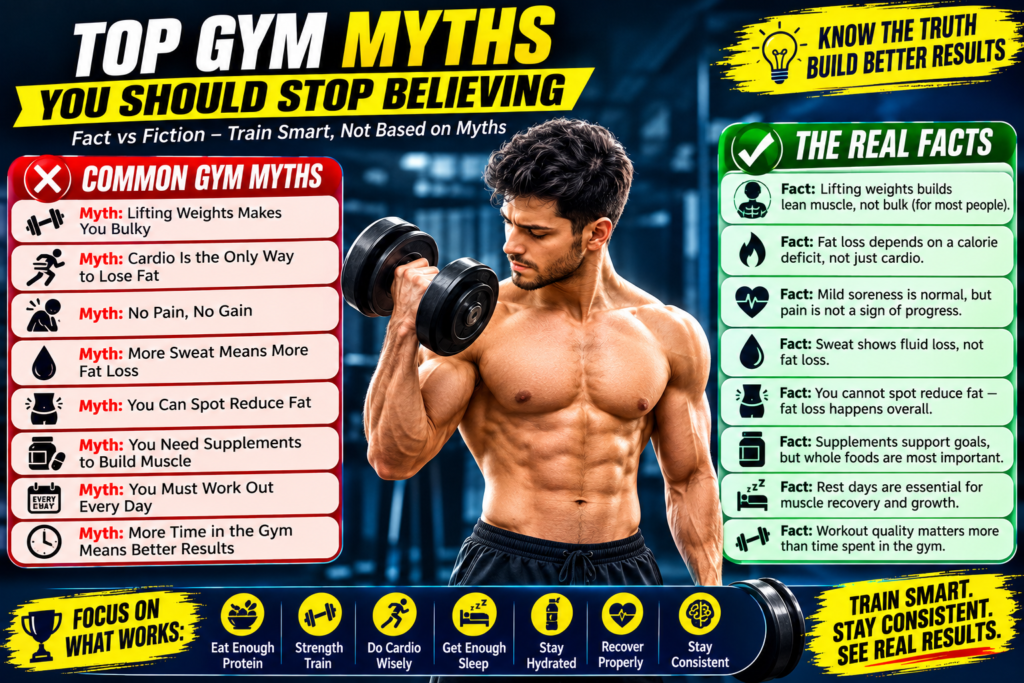
The fitness industry is filled with advice, but not all of it is true. From social media influencers to outdated gym advice, many fitness myths continue to confuse beginners and even experienced gym-goers. Believing these myths can slow your progress, increase your risk of injury, and prevent you from achieving your fitness goals.
In this blog, we’ll debunk the most common gym myths and explain the facts behind effective training, nutrition, and recovery. By separating fact from fiction, you’ll be able to train smarter and see better results.
Why Gym Myths Exist
Fitness myths spread quickly because of:
- Social media trends
- Misleading advertisements
- Outdated information
- Celebrity workout routines
- Personal opinions presented as facts
While some advice may work for certain individuals, it doesn’t always apply to everyone. Scientific research and consistency should guide your fitness journey.
Myth 1: Lifting Weights Makes You Bulky
This is one of the biggest misconceptions, especially among women.
The Truth
Building large muscles requires years of consistent training, high-calorie nutrition, and favorable genetics. Most people who lift weights develop a leaner, stronger, and more toned physique rather than becoming bulky.
Strength training helps:
- Burn fat
- Improve muscle definition
- Increase metabolism
- Strengthen bones
- Improve posture
Women naturally produce much lower levels of testosterone than men, making it difficult to gain excessive muscle mass.
Myth 2: Cardio Is the Only Way to Lose Fat
Many people spend hours running on treadmills believing cardio alone is enough.
The Truth
Fat loss occurs when you maintain a calorie deficit, regardless of the type of exercise.
Strength training is equally important because it:
- Builds lean muscle
- Boosts resting metabolism
- Helps preserve muscle during weight loss
- Improves body composition
The best fat-loss plan combines cardio, resistance training, and healthy eating.
Myth 3: No Pain, No Gain
Some people believe every workout should leave you extremely sore.
The Truth
Mild muscle soreness is normal, especially when trying new exercises. However, severe pain is not a sign of an effective workout.
Pain may indicate:
- Poor technique
- Injury
- Overtraining
Progress comes from consistent training, not constant pain.
Myth 4: More Sweat Means More Fat Loss
Sweating is often mistaken for burning more fat.
The Truth
Sweat is your body’s cooling system.
You may sweat more because of:
- Hot weather
- High humidity
- Genetics
- Clothing
Sweating mostly reflects fluid loss, not fat loss. Once you rehydrate, the weight returns.
Myth 5: You Can Spot Reduce Fat
Many people believe doing hundreds of crunches will burn belly fat.
The Truth
You cannot choose where your body loses fat.
Fat loss occurs throughout the entire body based on genetics and overall calorie balance.
Core exercises strengthen abdominal muscles, but reducing belly fat requires:
- Calorie deficit
- Full-body exercise
- Healthy nutrition
- Patience
Myth 6: You Need Supplements to Build Muscle
Supplements are heavily marketed as essential for fitness success.
The Truth
Whole foods should always come first.
A balanced diet containing:
- Protein
- Healthy fats
- Complex carbohydrates
- Fruits
- Vegetables
provides most of the nutrients your body needs.
Supplements like whey protein or creatine can support your goals, but they cannot replace proper nutrition.
Myth 7: More Time in the Gym Means Better Results
Some people believe spending two or three hours in the gym every day guarantees faster progress.
The Truth
Workout quality matters more than workout length.
Most effective strength-training sessions last between 45 and 75 minutes.
Excessive training without adequate recovery can lead to:
- Fatigue
- Muscle loss
- Reduced performance
- Increased injury risk
Myth 8: You Must Work Out Every Day
Many beginners feel guilty about taking rest days.
The Truth
Muscles grow during recovery—not while you’re exercising.
Rest days help:
- Repair muscles
- Restore energy
- Reduce soreness
- Prevent overtraining
Aim for at least one or two recovery days each week.
Myth 9: Lifting Heavy Is Dangerous
Some people avoid heavy weights because they fear injury.
The Truth
Heavy lifting is safe when:
- Using proper technique
- Warming up correctly
- Increasing weight gradually
- Maintaining control
Poor form—not heavy weights—is usually the cause of injuries.
Myth 10: You Must Eat Immediately After Every Workout
The “30-minute anabolic window” is often exaggerated.
The Truth
Eating protein after workouts supports recovery, but your total daily nutrition matters much more than exact timing.
A balanced meal within one to two hours after training is generally sufficient for most people.
Myth 11: Machines Are Better Than Free Weights
Some believe machines produce better results.
The Truth
Both have benefits.
Machines are useful for:
- Beginners
- Rehabilitation
- Isolating muscles
Free weights improve:
- Balance
- Coordination
- Functional strength
- Muscle activation
A combination of both often provides the best results.
Myth 12: Fat Turns Into Muscle
This is one of the oldest gym myths.
The Truth
Fat and muscle are completely different tissues.
Fat cannot become muscle, and muscle cannot become fat.
Instead:
- Fat cells shrink during weight loss.
- Muscle fibers grow through resistance training and proper nutrition.
Myth 13: Carbohydrates Make You Fat
Many diets encourage eliminating carbs completely.
The Truth
Carbohydrates are your body’s preferred energy source.
Healthy carbohydrates include:
- Brown rice
- Oats
- Sweet potatoes
- Fruits
- Whole grains
Weight gain occurs from consuming more calories than you burn—not from carbohydrates alone.
Myth 14: Protein Shakes Are Steroids
Some beginners worry that protein supplements are harmful.
The Truth
Protein powder is simply a convenient source of protein.
It helps when:
- Daily protein needs are difficult to meet
- Post-workout nutrition is needed
- Busy schedules limit meal preparation
Choose high-quality products and use them as part of a balanced diet.
Myth 15: Women Should Only Lift Light Weights
Many women fear heavy lifting.
The Truth
Women benefit from strength training just as much as men.
Benefits include:
- Increased strength
- Better bone density
- Improved metabolism
- Lean muscle development
- Better posture
- Reduced body fat
Heavy lifting does not automatically make women bulky.
Tips to Avoid Fitness Misinformation
Follow these simple guidelines:
- Learn from certified fitness professionals.
- Read evidence-based articles.
- Avoid believing every social media trend.
- Focus on long-term consistency.
- Track your own progress.
- Ask questions before trying extreme workout methods.
Building knowledge is just as important as building strength.
The Fundamentals That Actually Work
Instead of chasing myths, focus on proven fitness principles:
- Eat enough protein.
- Train consistently.
- Include strength training.
- Add cardio for heart health.
- Sleep 7–9 hours each night.
- Stay hydrated.
- Progress gradually.
- Recover properly.
- Maintain a balanced diet.
- Be patient and consistent.
These habits produce lasting results.
Final Thoughts
Fitness success doesn’t come from shortcuts or believing popular myths—it comes from understanding the basics and staying consistent. Whether it’s the idea that lifting weights makes you bulky, cardio is the only way to lose fat, or supplements are mandatory for muscle growth, many common gym myths can hold you back from reaching your goals.
By focusing on science-backed training, balanced nutrition, proper recovery, and realistic expectations, you’ll make better decisions and achieve sustainable results. Remember, progress takes time. Trust the process, ignore the myths, and build healthy habits that support long-term fitness and overall well-being.