Protein is one of the most essential nutrients your body needs every day. It plays a vital role in building and repairing muscles, producing enzymes and hormones, supporting the immune system, and maintaining healthy skin, hair, and nails. Whether you’re an athlete, a gym enthusiast, or simply someone who wants to stay healthy, getting enough protein is crucial for your overall well-being.
Unfortunately, many people don’t consume enough protein in their daily diet. Busy lifestyles, poor eating habits, and unbalanced meals can all contribute to protein deficiency. While severe protein deficiency is uncommon, even a moderate lack of protein can affect your energy levels, muscle health, and recovery.
In this blog, we’ll discuss the common signs that indicate you may need more protein in your diet and how to ensure you’re getting enough every day.
Why Is Protein So Important?
Protein is made up of amino acids, often referred to as the building blocks of the body. These amino acids help repair tissues, build muscle, support metabolism, and maintain nearly every function in your body.
Protein is essential for:
- Muscle growth and repair
- Healthy bones
- Hormone production
- Enzyme function
- Strong immune system
- Healthy skin, hair, and nails
- Weight management
- Faster recovery after exercise
Without adequate protein, your body struggles to perform these important functions efficiently.
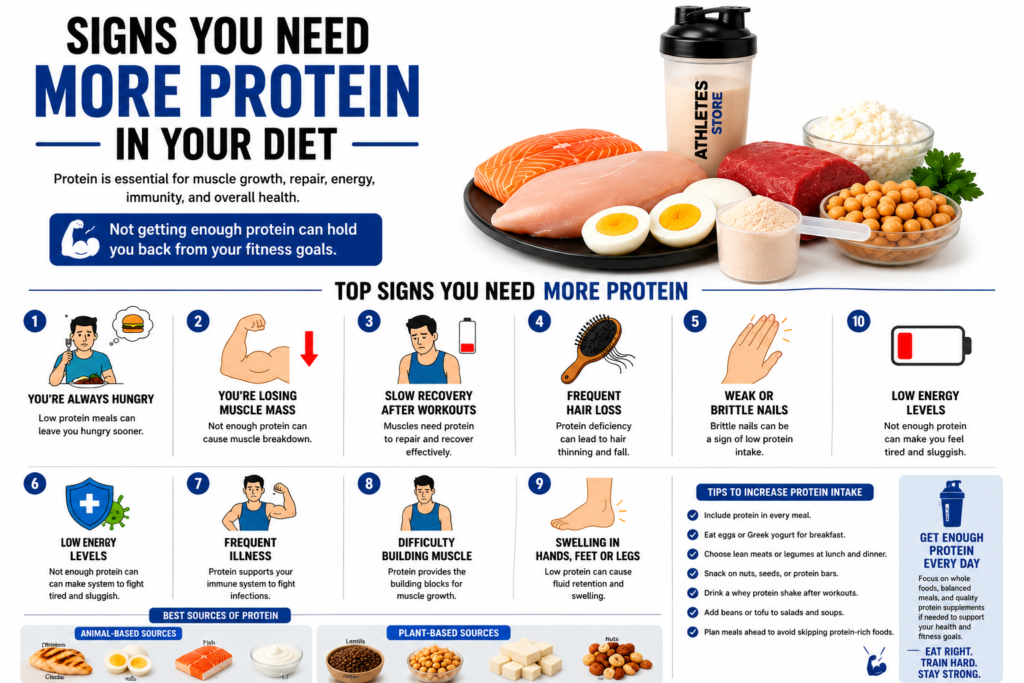
1. You’re Constantly Hungry
One of the earliest signs of inadequate protein intake is feeling hungry shortly after eating.
Protein helps keep you full by slowing digestion and regulating hunger hormones. Meals that are low in protein may leave you craving snacks throughout the day.
What You Can Do
Include protein-rich foods in every meal, such as:
- Eggs
- Chicken
- Fish
- Paneer
- Greek yogurt
- Lentils
- Whey protein
2. You’re Losing Muscle Mass
If your body doesn’t get enough protein, it may begin breaking down muscle tissue to meet its amino acid needs.
This can result in:
- Reduced muscle size
- Weakness
- Lower strength
- Poor workout performance
This is especially common among people trying to lose weight without consuming enough protein.
3. Slow Recovery After Workouts
Exercise causes tiny tears in muscle fibers. Protein helps repair these muscles, making them stronger over time.
If recovery takes longer than usual, protein intake may be insufficient.
Common signs include:
- Muscle soreness lasting several days
- Fatigue after workouts
- Difficulty completing training sessions
Consuming protein after exercise can significantly improve recovery.
4. Frequent Hair Loss
Hair is primarily made of a protein called keratin.
When protein intake is too low, your body prioritizes essential organs over hair growth.
This may lead to:
- Hair thinning
- Excessive hair shedding
- Slower hair growth
Eating enough protein helps maintain healthy hair.
5. Weak or Brittle Nails
Protein supports healthy nail growth.
If your nails:
- Break easily
- Split frequently
- Grow slowly
It may indicate inadequate protein intake or other nutritional deficiencies.
6. Low Energy Levels
Protein helps maintain muscle function and supports steady energy throughout the day.
People with low protein intake often experience:
- Fatigue
- Low motivation
- Reduced exercise performance
- Lack of focus
Balanced meals containing protein can help stabilize energy levels.
7. Frequent Illness
Your immune system depends on protein to produce antibodies that help fight infections.
If you often catch colds or take longer to recover from illness, poor nutrition—including inadequate protein—could be one contributing factor.
8. Difficulty Building Muscle
Many beginners spend hours in the gym but don’t see muscle growth because they aren’t eating enough protein.
Strength training stimulates muscles, but protein provides the building blocks needed for repair and growth.
Without sufficient protein, muscle gains may be limited.
9. Swelling in Hands, Feet, or Legs
Protein helps maintain fluid balance in the body.
Inadequate protein intake can sometimes contribute to fluid retention, leading to swelling in the feet, ankles, or hands. While swelling can have many causes, persistent or unexplained swelling should be evaluated by a healthcare professional.
10. Slow Wound Healing
Protein is essential for repairing damaged tissues.
Cuts, bruises, and injuries may take longer to heal if your body lacks adequate protein.
Proper nutrition supports faster healing and recovery.
How Much Protein Do You Need?
Protein needs vary depending on age, activity level, and fitness goals.
General recommendations include:
- Sedentary adults: 0.8 grams per kilogram of body weight
- Active individuals: 1.2–1.6 grams per kilogram
- Muscle building: 1.6–2.2 grams per kilogram
- Endurance athletes: 1.2–2.0 grams per kilogram
For example, a person weighing 70 kg who is trying to build muscle may benefit from about 112–154 grams of protein per day.
Best High-Protein Foods
Meeting your protein needs doesn’t have to be difficult.
Excellent protein sources include:
Animal-Based
- Chicken breast
- Eggs
- Fish
- Lean beef
- Turkey
- Greek yogurt
- Cottage cheese (Paneer)
- Milk
Plant-Based
- Lentils
- Chickpeas
- Kidney beans
- Soybeans
- Tofu
- Quinoa
- Peanuts
- Almonds
Can Protein Supplements Help?
Yes. Protein supplements are a convenient way to increase your daily protein intake, especially if you’re unable to get enough through food alone.
Popular options include:
- Whey Protein
- Whey Isolate
- Plant-Based Protein
- Casein Protein
Protein supplements are particularly useful for:
- Gym beginners
- Athletes
- Busy professionals
- Students
- Older adults with higher protein needs
However, supplements should complement—not replace—a balanced diet.
Tips to Increase Protein Intake
- Include protein in every meal.
- Eat eggs or Greek yogurt for breakfast.
- Choose lean meats or legumes at lunch and dinner.
- Snack on nuts, seeds, or protein bars.
- Drink a whey protein shake after workouts.
- Add beans or tofu to salads and soups.
- Plan meals ahead to avoid skipping protein-rich foods.
Common Myths About Protein
Myth 1: Protein Is Only for Bodybuilders
False. Everyone needs protein for overall health, not just athletes.
Myth 2: More Protein Always Means More Muscle
Muscle growth also depends on proper training, adequate calories, and recovery.
Myth 3: Protein Supplements Replace Meals
Protein shakes are supplements, not complete meal replacements. Whole foods provide fiber, vitamins, and minerals that are equally important.
Final Thoughts
Protein is one of the most important nutrients for maintaining a healthy body and achieving your fitness goals. If you’re constantly hungry, struggling to recover from workouts, losing muscle, feeling fatigued, or noticing changes in your hair and nails, it may be time to evaluate your protein intake.
The good news is that increasing your protein intake is often simple. Focus on eating a balanced diet rich in lean meats, dairy products, legumes, nuts, seeds, and other high-protein foods. If needed, a quality protein supplement can help you meet your daily requirements conveniently.
Remember, good nutrition is the foundation of good health. Combine adequate protein intake with regular exercise, quality sleep, and proper hydration to support muscle growth, faster recovery, improved energy, and long-term wellness.
Word Count: Approximately 930 words