
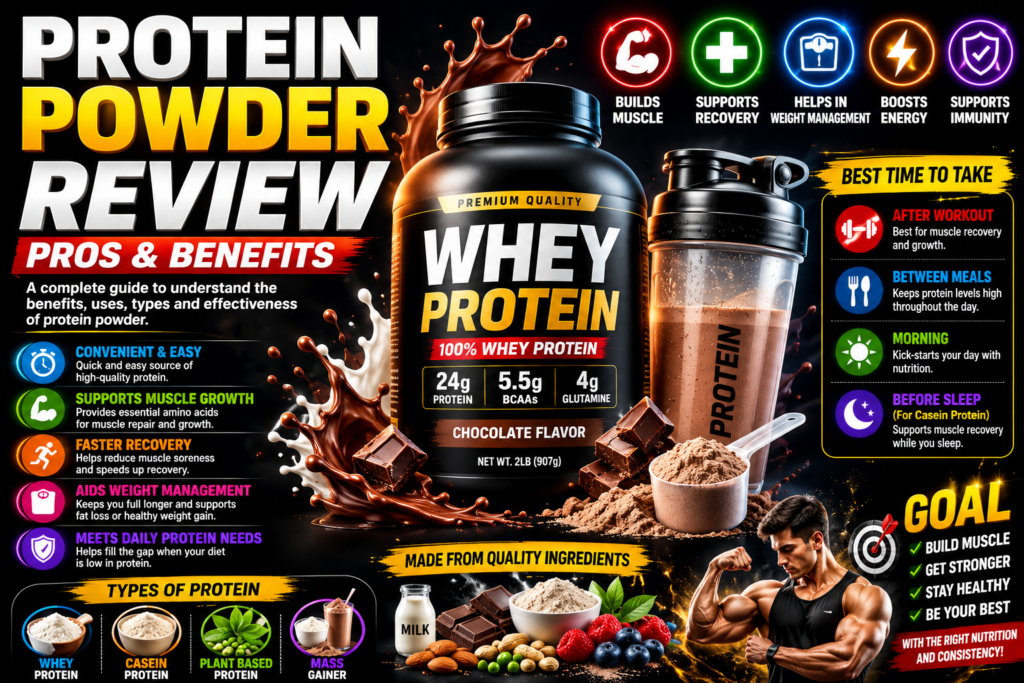
Protein powder has become one of the most popular fitness supplements in the world. From gym beginners to professional athletes, millions of people use protein supplements to support muscle growth, recovery, weight management, and overall health. However, many people still wonder whether protein powder is truly beneficial or just another marketing trend.
The truth is that protein powder can be a very effective supplement when used correctly. It is convenient, easy to consume, and helps people meet their daily protein requirements. In this blog, we will review protein powder, its benefits, different types, possible drawbacks, and whether it is worth adding to your fitness routine.
What is Protein Powder?
Protein powder is a nutritional supplement made from protein-rich sources such as milk, eggs, soy, peas, or rice. It is designed to provide a quick and convenient source of protein for people who struggle to meet their daily needs through food alone.
The most common type is whey protein, which is derived from milk during the cheese-making process. Protein powder usually comes in flavored forms like chocolate, vanilla, or cookies and cream.
Protein supplements are available in different forms:
- Whey Protein Concentrate
- Whey Protein Isolate
- Casein Protein
- Plant-Based Protein
- Egg Protein
Each type serves different fitness and dietary needs.
Why is Protein Important?
Protein is one of the essential nutrients required by the body. It plays a major role in:
- Muscle growth and repair
- Hormone production
- Immune system support
- Tissue repair
- Healthy skin, hair, and nails
When you exercise, especially strength training, your muscles experience microscopic tears. Protein helps repair these muscles, making them stronger and larger over time.
Without enough protein, muscle recovery becomes slower and workout performance may decline.
Pros of Protein Powder
1. Convenient Source of Protein
One of the biggest advantages of protein powder is convenience. Preparing high-protein meals multiple times a day can be difficult, especially for busy individuals.
A protein shake can be prepared within minutes and consumed anywhere.
This makes protein powder ideal for:
- Office workers
- Students
- Travelers
- Gym-goers with busy schedules
2. Supports Muscle Growth
Protein powder helps provide the amino acids needed for muscle repair and growth. When combined with resistance training, it can improve lean muscle development.
Whey protein is especially effective because it contains all essential amino acids and is rapidly absorbed by the body.
For people trying to gain muscle mass, protein powder can help increase daily protein intake efficiently.
3. Faster Workout Recovery
After intense workouts, muscles need nutrients to recover properly. Protein powder supports:
- Faster muscle repair
- Reduced soreness
- Better recovery
- Improved workout performance
Post-workout protein intake is important because muscles absorb nutrients more effectively during this period.
4. Helps with Weight Management
Protein can help with both weight gain and weight loss depending on how it is used.
For Weight Loss:
Protein helps increase fullness and reduce hunger cravings. This can lower overall calorie intake and support fat loss.
For Weight Gain:
Protein shakes combined with calorie-rich foods can help skinny individuals gain healthy muscle mass.
5. Easy to Digest
High-quality protein powders are usually easy to digest and absorb quickly. Whey protein isolate, for example, contains very little lactose and is suitable for many people with mild lactose sensitivity.
This makes protein powder an effective option immediately after workouts.
6. Helps Meet Daily Protein Goals
Many people fail to consume enough protein through food alone. Protein powder helps fill nutritional gaps easily.
For example:
- Gym beginners
- Vegetarians
- Busy professionals
- Athletes
These groups often benefit from additional protein support.
Different Types of Protein Powder
Whey Protein
- Fast-digesting
- Best for muscle growth
- Ideal post-workout
Casein Protein
- Slow-digesting
- Best before sleep
- Supports overnight recovery
Plant-Based Protein
- Suitable for vegans
- Made from peas, soy, rice, or hemp
Mass Gainer Protein
- High in calories and carbs
- Best for skinny individuals wanting weight gain
Choosing the right type depends on your goals and dietary preferences.
Possible Drawbacks of Protein Powder
Although protein powder has many benefits, it also has some disadvantages if used incorrectly.
1. Overdependence on Supplements
Some people replace healthy meals with protein shakes completely. Whole foods should always remain the foundation of nutrition.
2. Digestive Issues
Low-quality protein powders may cause:
- Bloating
- Gas
- Stomach discomfort
Choosing trusted brands can reduce these issues.
3. Excess Calorie Intake
Some protein powders contain added sugars and unnecessary calories, which may lead to fat gain.
Always read nutrition labels carefully.
4. Expensive Products
Premium protein powders can be costly for some individuals. However, they are not mandatory for fitness success.
Best Time to Take Protein Powder
The most common times include:
- After workouts
- Breakfast
- Between meals
- Before sleep (casein protein)
Post-workout protein is especially popular because it supports recovery and muscle growth.
Is Protein Powder Safe?
Yes, high-quality protein powders are generally safe for healthy individuals when consumed in moderation. However, balance is important.
People with kidney problems or medical conditions should consult a healthcare professional before using supplements regularly.
Conclusion
Protein powder is one of the most useful and effective fitness supplements available today. It offers convenience, supports muscle growth, improves recovery, and helps people meet daily protein needs more easily.
However, protein powder is not a magic solution. It works best when combined with:
- Proper workouts
- Healthy eating
- Adequate sleep
- Consistency
Whole foods should always remain your primary nutrition source, while protein powder acts as a supportive supplement. Whether your goal is muscle gain, fat loss, or overall fitness improvement, using protein powder wisely can help you achieve better results more efficiently.