
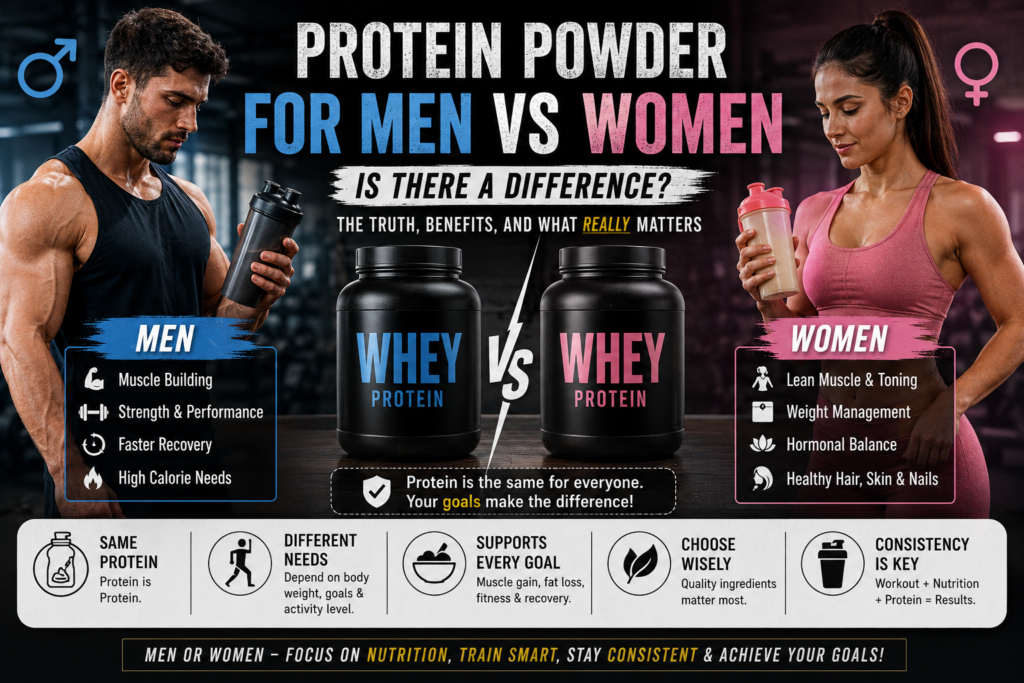
Protein powder has become one of the most popular supplements among fitness enthusiasts, athletes, and even people who simply want to maintain a healthy lifestyle. However, one common question that many people ask is: Do men and women need different protein powders?
The short answer is No. Protein itself is the same for everyone. The real differences lie in the amount of protein needed, overall calorie intake, fitness goals, and sometimes the added ingredients found in certain products. In this blog, we’ll explain everything you need to know about protein powder for men and women.
What Is Protein Powder?
Protein powder is a dietary supplement that helps you increase your daily protein intake. It is made from sources such as whey milk protein, casein, soy, pea, rice, or a blend of plant proteins.
Protein is one of the three essential macronutrients and is responsible for:
- Building and repairing muscles
- Supporting healthy bones
- Maintaining skin, hair, and nails
- Improving recovery after workouts
- Helping you stay full for longer
- Supporting immune function
Whether you are male or female, your body uses protein in exactly the same way.
Is There a Difference Between Men’s and Women’s Protein Powder?
The biggest misconception in the supplement industry is that protein powders are designed differently for men and women.
The truth is that protein molecules are identical regardless of gender.
A scoop of whey protein provides the same amino acids to both men and women. The body doesn’t recognize whether the protein came from a product marketed to men or women.
Many companies simply use different packaging, colors, and marketing strategies to target different audiences.
Why Are Some Products Labeled “For Women”?
Some brands create protein powders specifically for women by adding ingredients such as:
- Extra collagen for skin and hair
- Biotin
- Iron
- Calcium
- Vitamin D
- Lower calories
- Lower carbohydrates
- Added digestive enzymes
These additional nutrients may support women’s health, but they do not make the protein itself different.
Similarly, protein powders marketed for men may include:
- Creatine
- Testosterone-supporting herbs
- Higher calorie content
- Extra carbohydrates for muscle gain
Again, these are added ingredients—not different protein.
How Much Protein Do Men and Women Need?
Protein requirements depend more on body weight and activity level than gender.
General recommendations are:
- Sedentary adults: 0.8 grams per kilogram of body weight
- Active individuals: 1.2–1.7 grams per kilogram
- Strength athletes: 1.6–2.2 grams per kilogram
For example:
A 60 kg active woman may need around 90–120 grams of protein daily.
An 80 kg active man may need approximately 120–160 grams daily.
The difference comes from body size and activity level, not because men require a special type of protein.
Best Protein Powder for Men
Men who want to build muscle often choose:
Whey Protein Concentrate
An affordable option with excellent protein quality and naturally occurring nutrients.
Whey Protein Isolate
Contains more protein per serving with less fat and lactose, making it ideal for lean muscle building.
Casein Protein
Digests slowly and is commonly taken before bedtime to support overnight muscle recovery.
Plant Protein
Suitable for vegetarians, vegans, and people with dairy intolerance.
Best Protein Powder for Women
Women can safely use the same protein powders as men.
Depending on fitness goals, women often choose:
- Whey Protein Isolate
- Whey Protein Concentrate
- Plant-Based Protein
- Collagen Protein (for skin and joints, alongside regular protein)
The best choice depends on dietary preferences, digestion, and overall nutrition—not gender.
Does Protein Make Women Bulky?
This is one of the biggest myths in fitness.
Protein does not make women bulky.
Muscle growth requires:
- Heavy resistance training
- Consistent calorie surplus
- Progressive overload
- Years of training
- Higher testosterone levels
Women naturally produce much lower testosterone than men, making it much harder to gain large muscle mass.
Protein simply helps maintain lean muscle, improve recovery, and support a toned, healthy body.
Can Protein Help With Weight Loss?
Yes.
Protein supports healthy weight management because it:
- Keeps you feeling full longer
- Helps reduce unnecessary snacking
- Preserves muscle during dieting
- Supports metabolism by maintaining lean body mass
Both men and women can benefit from higher protein intake while following a balanced calorie-controlled diet.
Remember, protein alone does not burn fat. Fat loss occurs when you maintain a calorie deficit through proper nutrition and physical activity.
When Should You Take Protein Powder?
There is no single “best” time.
Common options include:
- After workouts for muscle recovery
- Between meals to increase protein intake
- At breakfast for better satiety
- Before bed if using casein protein
The most important factor is meeting your total daily protein requirement.
How to Choose the Right Protein Powder
When buying protein powder, consider:
- Protein source (Whey, Casein, Plant Protein)
- Protein content (20–30 grams per serving)
- Low added sugar
- Third-party quality testing
- Trusted brand reputation
- Ingredient transparency
Choose a product that matches your fitness goals rather than one marketed specifically to men or women.
Common Myths About Protein Powder
Myth 1: Women Need Women’s Protein
False. Standard whey protein works equally well for women.
Myth 2: Men Need Stronger Protein
False. Protein quality is determined by amino acids, not gender.
Myth 3: Protein Damages Healthy Kidneys
Research shows that healthy individuals can safely consume recommended amounts of protein. People with existing kidney disease should follow their doctor’s advice.
Myth 4: More Protein Means More Muscle
Muscle growth depends on training, recovery, total calorie intake, and consistency. Protein supports the process but is not the only factor.
Final Verdict
So, is there really a difference between protein powder for men and women?
Not in terms of the protein itself.
Both men and women can use the same high-quality whey or plant-based protein powder. The real differences are individual calorie needs, body weight, fitness goals, and any added vitamins or nutrients included by manufacturers.
Instead of choosing a product based on gender-specific marketing, focus on selecting a trusted protein supplement with high-quality ingredients that matches your nutritional needs. Combined with a balanced diet, regular exercise, and proper recovery, protein powder can be a convenient and effective way to support muscle growth, recovery, weight management, and overall health.
Whether your goal is building muscle, losing fat, improving fitness, or maintaining a healthy lifestyle, the best protein powder is simply the one that helps you consistently meet your daily protein requirements.