
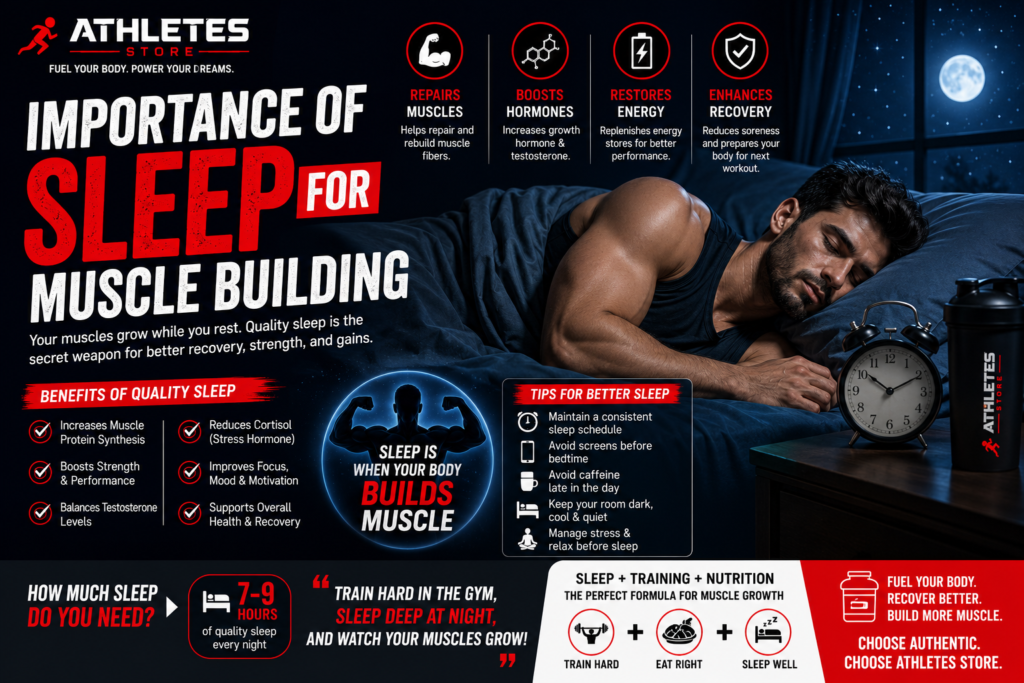
Building muscle isn’t just about lifting heavy weights and eating enough protein. One of the most overlooked aspects of muscle growth is quality sleep. While workouts stimulate your muscles, it is during sleep that your body repairs damaged muscle fibers, releases growth hormones, and prepares you for your next training session.
Many gym-goers focus only on supplements and exercise while ignoring sleep, but without proper rest, even the best workout and nutrition plan may not deliver the desired results. In this blog, we’ll explore why sleep is essential for muscle building and how you can optimize your recovery for maximum gains.
Why Sleep is Important for Muscle Growth
When you train, your muscles develop tiny tears. This is a natural part of strength training. Your body repairs these tears during rest, making the muscles bigger and stronger.
Sleep is the period when:
- Muscle tissues repair themselves
- Growth hormone production increases
- Protein synthesis improves
- Energy stores are restored
- The nervous system recovers
- Stress hormones decrease
Without enough sleep, your muscles simply cannot recover effectively.
How Muscles Grow During Sleep
Muscle growth occurs through a process called muscle protein synthesis. During deep sleep, your body repairs damaged muscle fibers using protein from your diet.
The better your sleep quality, the more efficiently your body can:
- Repair muscles
- Increase strength
- Build lean muscle mass
- Reduce soreness
- Improve workout performance
This is why professional athletes prioritize sleep just as much as training.
Growth Hormone Is Released During Sleep
One of the biggest reasons sleep is important is the release of Human Growth Hormone (HGH).
Growth hormone helps:
- Build new muscle tissue
- Burn body fat
- Improve recovery
- Strengthen bones
- Repair damaged cells
Most HGH is released during deep sleep, especially in the first few hours after falling asleep.
Poor sleep significantly reduces this natural hormone production.
Better Recovery Means Better Performance
Heavy workouts stress both muscles and the nervous system.
Sleep helps:
- Reduce muscle soreness
- Restore energy
- Improve joint recovery
- Increase endurance
- Prepare your body for the next workout
If you constantly feel tired in the gym, poor sleep may be the reason.
Sleep Improves Protein Synthesis
Protein alone doesn’t build muscle.
Your body must actually use the protein to repair muscle fibers.
Quality sleep improves:
- Amino acid utilization
- Muscle protein synthesis
- Nutrient absorption
- Muscle recovery speed
This means your protein intake becomes more effective.
Sleep Helps Maintain Testosterone Levels
Testosterone plays a major role in:
- Muscle growth
- Strength
- Recovery
- Fat loss
Studies show that sleeping less than 6 hours regularly may reduce testosterone production.
Lower testosterone often results in:
- Reduced muscle gains
- Lower strength
- Slower recovery
- Increased fatigue
Sleep Reduces Cortisol
Cortisol is known as the stress hormone.
High cortisol levels can:
- Break down muscle tissue
- Slow recovery
- Increase fat storage
- Reduce workout performance
Adequate sleep naturally lowers cortisol and creates a better environment for muscle growth.
Better Sleep Means Better Gym Performance
Lack of sleep affects both physical and mental performance.
Good sleep improves:
- Strength
- Focus
- Reaction time
- Coordination
- Motivation
- Workout intensity
You’ll likely lift heavier weights and complete better workouts when well-rested.
How Much Sleep Do You Need?
Most adults should aim for:
- 7–9 hours of quality sleep every night.
People who train intensely may benefit from closer to 8–9 hours to support optimal recovery and muscle growth.
Signs You’re Not Getting Enough Sleep
You may not be sleeping enough if you experience:
- Constant fatigue
- Poor gym performance
- Slow recovery
- Frequent muscle soreness
- Low motivation
- Difficulty concentrating
- Increased cravings for unhealthy foods
Best Foods Before Bed for Recovery
A light, protein-rich snack before bed can support overnight muscle repair.
Good options include:
- Greek yogurt
- Cottage cheese (Paneer)
- Milk
- Whey protein (if needed)
- Almonds
- Peanut butter with whole-grain toast
Avoid very heavy or sugary meals right before sleeping.
Tips to Improve Sleep Quality
1. Maintain a Regular Sleep Schedule
Go to bed and wake up at the same time every day.
2. Limit Screen Time
Avoid phones, laptops, and TV for at least 30–60 minutes before bedtime, as blue light can interfere with melatonin production.
3. Keep Your Room Cool and Dark
A comfortable sleeping environment promotes deeper sleep.
4. Avoid Caffeine Late in the Day
Coffee, energy drinks, and pre-workouts taken in the evening can make it harder to fall asleep.
5. Stay Hydrated
Drink enough water throughout the day, but avoid excessive fluids immediately before bed to reduce nighttime awakenings.
6. Manage Stress
Practices like deep breathing, meditation, or light stretching can help relax your body before sleep.
Common Mistakes That Hurt Muscle Recovery
Avoid these habits:
- Sleeping less than 6 hours
- Training very late without winding down
- Excessive alcohol consumption
- Skipping post-workout nutrition
- Staying up late regularly
- Using screens until bedtime
These can reduce recovery and limit muscle growth.
Do Supplements Replace Sleep?
No. Supplements like whey protein, creatine, BCAAs, or recovery drinks can support your fitness journey, but they cannot replace quality sleep.
Think of muscle growth as a combination of:
- Effective training
- Balanced nutrition
- Proper hydration
- High-quality sleep
Neglecting any one of these factors can slow your progress.
Final Thoughts
Sleep is one of the most powerful yet underrated tools for building muscle. During deep sleep, your body repairs muscle fibers, releases growth hormone, balances testosterone, lowers cortisol, and restores energy levels. Without enough quality sleep, even the best workout routine and nutrition plan may not deliver the results you expect.
Aim for 7–9 hours of quality sleep each night, combine it with consistent strength training, a protein-rich diet, and proper hydration, and you’ll create the ideal environment for muscle growth and recovery.
If you’re using supplements like whey protein, creatine, or casein to support your fitness goals, choose authentic products from trusted retailers like Athletes Store. Remember, supplements enhance your efforts—but sleep is the foundation of recovery and long-term muscle growth.