
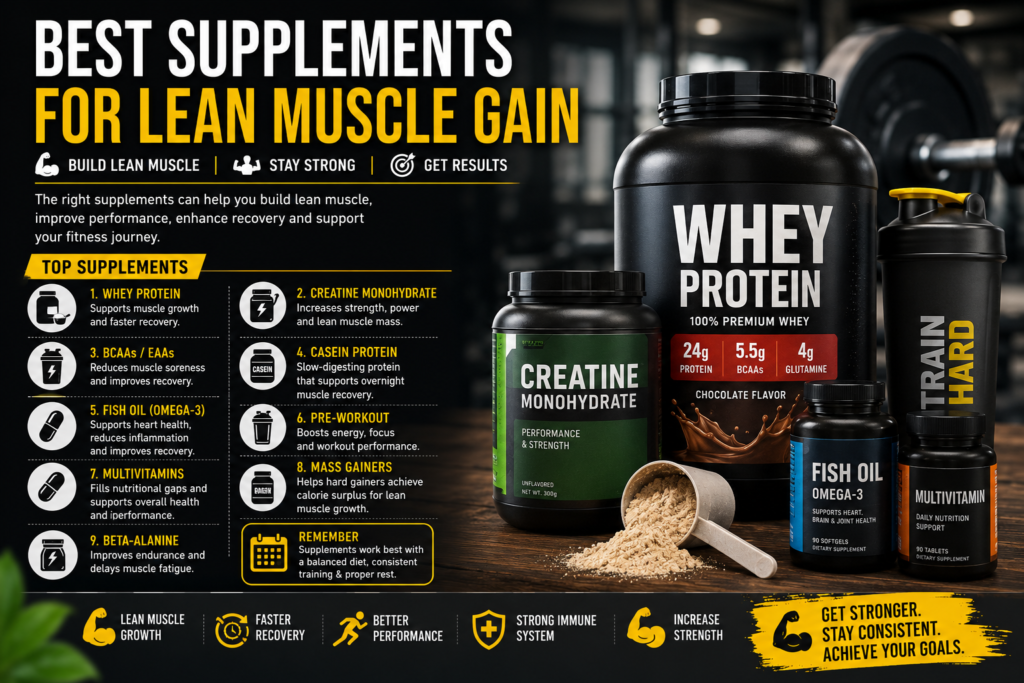
Building lean muscle is a common fitness goal for many gym enthusiasts, athletes, and fitness beginners. Unlike traditional bulking, lean muscle gain focuses on increasing muscle mass while minimizing fat accumulation. Achieving this requires a combination of proper training, balanced nutrition, adequate recovery, and the right supplements.
While supplements are not a substitute for a healthy diet, they can help you meet your nutritional needs and maximize your muscle-building potential. In this guide, we’ll explore the best supplements for lean muscle gain, how they work, and how to use them effectively.
What is Lean Muscle Gain?
Lean muscle gain refers to increasing muscle size and strength while maintaining a low body fat percentage. The goal is to build a strong, athletic physique without excessive fat gain.
To achieve lean muscle growth, your body needs:
- A slight calorie surplus
- High-quality protein
- Consistent strength training
- Proper sleep and recovery
- Effective supplementation
Let’s look at the best supplements that can support your lean muscle-building journey.
1. Whey Protein
Why It’s Important
Whey protein is one of the most effective and popular supplements for muscle growth. It is a complete protein containing all nine essential amino acids, including leucine, which plays a crucial role in muscle protein synthesis.
Benefits
- Supports muscle repair and recovery
- Helps increase daily protein intake
- Fast digestion and absorption
- Promotes lean muscle growth
Best Time to Take
- After workouts
- Between meals
- In the morning
Recommended Intake
20–30 grams per serving, depending on your daily protein requirements.
2. Creatine Monohydrate
Why It’s Important
Creatine is one of the most researched and proven supplements for increasing muscle strength and performance.
It helps produce ATP (adenosine triphosphate), the primary energy source for high-intensity exercise.
Benefits
- Improves workout performance
- Increases muscle strength
- Supports lean muscle growth
- Enhances recovery
Best Time to Take
- Before or after workouts
- Any consistent time daily
Recommended Intake
3–5 grams per day.
3. Casein Protein
Why It’s Important
Casein is a slow-digesting protein that provides a steady release of amino acids for several hours.
This makes it ideal for preventing muscle breakdown during long periods without food.
Benefits
- Supports overnight muscle recovery
- Helps maintain muscle mass
- Reduces muscle breakdown
Best Time to Take
- Before bedtime
Recommended Intake
20–40 grams before sleep.
4. Branched-Chain Amino Acids (BCAAs)
Why They’re Important
BCAAs consist of three essential amino acids:
- Leucine
- Isoleucine
- Valine
These amino acids play a direct role in muscle recovery and protein synthesis.
Benefits
- Reduces muscle soreness
- Supports recovery
- Helps preserve lean muscle during dieting
- Improves workout endurance
Best Time to Take
- Before workouts
- During workouts
- After workouts
Recommended Intake
5–10 grams daily.
5. Essential Amino Acids (EAAs)
Why They’re Important
Unlike BCAAs, EAAs contain all essential amino acids required for muscle growth.
Many fitness experts now prefer EAAs because they provide a complete amino acid profile.
Benefits
- Supports muscle protein synthesis
- Enhances recovery
- Reduces muscle breakdown
Best Time to Take
- During workouts
- Between meals
Recommended Intake
10–15 grams per serving.
6. Pre-Workout Supplements
Why They’re Important
Pre-workout supplements help improve focus, energy, endurance, and workout intensity.
A better workout often leads to better muscle-building results.
Common Ingredients
- Caffeine
- Citrulline Malate
- Beta-Alanine
- Creatine
Benefits
- Increased energy
- Better focus
- Improved training performance
- Enhanced muscle pumps
Best Time to Take
30–45 minutes before exercise.
7. Omega-3 Fish Oil
Why It’s Important
Fish oil contains essential omega-3 fatty acids that support overall health and recovery.
Benefits
- Reduces inflammation
- Supports joint health
- Improves recovery
- Enhances heart health
Recommended Intake
1–3 grams daily.
Best Time to Take
With meals.
8. Multivitamins
Why They’re Important
Micronutrient deficiencies can negatively affect muscle growth, energy production, and recovery.
A quality multivitamin helps fill nutritional gaps.
Benefits
- Supports overall health
- Improves energy levels
- Supports immune function
- Enhances recovery
Best Time to Take
With breakfast or lunch.
9. Beta-Alanine
Why It’s Important
Beta-Alanine helps increase muscle carnosine levels, which can improve exercise performance.
Benefits
- Delays muscle fatigue
- Improves endurance
- Supports intense training sessions
Recommended Intake
2–5 grams daily.
Best Time to Take
Before workouts.
10. Mass Gainers (For Hard Gainers)
Why They’re Important
Some individuals struggle to consume enough calories for muscle growth.
Mass gainers provide extra calories, protein, and carbohydrates.
Benefits
- Supports calorie surplus
- Helps skinny individuals gain muscle
- Convenient nutrition source
Best Time to Take
- Post-workout
- Between meals
Recommended Intake
Based on calorie requirements.
Supplement Stack for Lean Muscle Gain
If your goal is lean muscle gain, a simple and effective supplement stack may include:
Morning
- Multivitamin
- Fish Oil
Pre-Workout
- Pre-Workout Supplement
- Creatine
Post-Workout
- Whey Protein
- Creatine
Before Bed
- Casein Protein
This combination supports muscle growth, recovery, strength, and overall performance.
Nutrition Still Matters Most
Even the best supplements cannot compensate for poor nutrition.
To maximize lean muscle gain:
Eat Enough Protein
Aim for approximately 1.6–2.2 grams of protein per kilogram of body weight.
Focus on Whole Foods
Include:
- Lean meats
- Eggs
- Fish
- Dairy products
- Whole grains
- Fruits
- Vegetables
Stay Hydrated
Water plays a vital role in muscle performance and recovery.
Prioritize Sleep
Aim for 7–9 hours of quality sleep every night.
Common Mistakes to Avoid
Taking Too Many Supplements
More supplements do not guarantee faster results.
Ignoring Diet
Supplements should support a balanced diet, not replace it.
Inconsistent Training
Muscle growth requires progressive overload and consistency.
Skipping Recovery
Recovery is where muscle growth actually happens.
Final Thoughts
Lean muscle gain requires a strategic combination of training, nutrition, recovery, and supplementation. While no supplement can replace hard work in the gym, the right products can help you reach your goals faster and more efficiently.
For most people, the best supplements for lean muscle gain include Whey Protein, Creatine Monohydrate, Fish Oil, Multivitamins, and a quality Pre-Workout. These supplements are backed by research and can significantly improve muscle growth, recovery, and performance when used consistently.
Remember, supplements are tools—not magic solutions. Stay committed to your workout routine, eat a protein-rich diet, recover properly, and remain patient. Lean muscle gain is a gradual process, but with consistency, the results will be worth it.
Word Count: ~950