
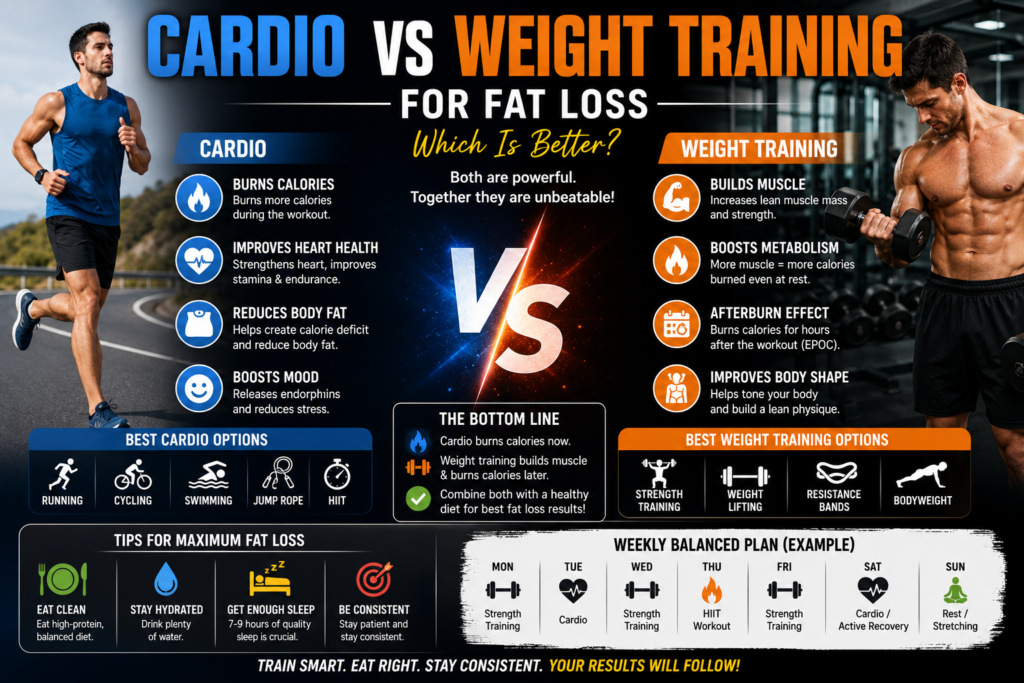
When it comes to losing fat, one of the biggest fitness debates is Cardio vs Weight Training. Many people spend hours on the treadmill, while others focus on lifting weights. So, which one burns more fat? The answer isn’t as simple as choosing one over the other. Both forms of exercise offer unique benefits, and the best approach often combines both with a healthy diet.
In this guide, we’ll compare cardio and weight training, explain how they affect fat loss, and help you decide which workout is best for your fitness goals.
Understanding Fat Loss
Fat loss occurs when you burn more calories than you consume, creating a calorie deficit. Exercise helps increase calorie expenditure, while proper nutrition ensures your body uses stored fat as fuel.
Successful fat loss depends on three key factors:
- A balanced, calorie-controlled diet
- Regular physical activity
- Consistency over time
Both cardio and weight training contribute to fat loss, but they do so in different ways.
What Is Cardio?
Cardiovascular exercise, commonly called cardio, includes activities that increase your heart rate and improve cardiovascular health.
Popular cardio exercises include:
- Running
- Walking
- Cycling
- Swimming
- Rowing
- Jump rope
- Dancing
- Stair climbing
Cardio primarily burns calories during the workout itself.
Benefits of Cardio for Fat Loss
1. Burns Calories Quickly
Cardio burns a significant number of calories in a short period.
For example:
- Walking (30 minutes): 120–180 calories
- Running (30 minutes): 300–500 calories
- Cycling (30 minutes): 250–450 calories
The exact number depends on your weight and workout intensity.
2. Improves Heart Health
Regular cardio strengthens your heart, improves blood circulation, and increases endurance.
3. Helps Reduce Body Fat
Steady cardio sessions can effectively reduce body fat when combined with a calorie deficit.
4. Boosts Mental Health
Cardio releases endorphins, helping reduce stress and improve mood.
Limitations of Cardio
While cardio burns calories efficiently, relying only on cardio has drawbacks:
- Limited muscle-building benefits
- Can lead to muscle loss during dieting
- Metabolism returns to normal soon after exercise
- Excessive cardio may increase fatigue
This is why many fitness experts recommend combining cardio with resistance training.
What Is Weight Training?
Weight training involves exercising against resistance to strengthen muscles.
Examples include:
- Dumbbell exercises
- Barbell lifts
- Resistance machines
- Bodyweight exercises
- Resistance bands
Strength training stimulates muscle growth while improving overall body composition.
Benefits of Weight Training for Fat Loss
1. Builds Lean Muscle
More muscle means your body burns more calories even while resting.
2. Increases Resting Metabolism
Muscle tissue requires more energy than fat tissue, increasing your daily calorie burn.
3. Afterburn Effect (EPOC)
After intense strength training, your body continues burning calories for several hours while recovering. This is known as Excess Post-Exercise Oxygen Consumption (EPOC).
4. Improves Body Shape
Weight loss alone may leave you looking smaller but less toned. Weight training helps create a lean, defined physique.
5. Prevents Muscle Loss
During a calorie deficit, resistance training helps preserve muscle mass while your body burns fat.
Limitations of Weight Training
Although highly effective, weight training also has limitations:
- Burns fewer calories during the workout compared to intense cardio
- Requires proper technique
- Muscle soreness may occur
- Beginners may need guidance to avoid injuries
Cardio vs Weight Training Comparison
| Feature | Cardio | Weight Training |
|---|---|---|
| Calories Burned During Workout | High | Moderate |
| Muscle Building | Low | High |
| Fat Loss | Excellent | Excellent |
| Resting Metabolism | Small Increase | Significant Increase |
| Improves Endurance | Excellent | Moderate |
| Body Toning | Moderate | Excellent |
| Bone Strength | Moderate | High |
| Long-Term Fat Loss | Good | Excellent |
Which Burns More Fat?
Cardio burns more calories during exercise.
Weight training burns fewer calories during the session but helps increase calorie burning after the workout and throughout the day by building muscle.
Over time, strength training can make fat loss more sustainable because it supports a higher resting metabolic rate.
HIIT: The Best of Both Worlds
High-Intensity Interval Training (HIIT) combines short bursts of intense exercise with recovery periods.
Example:
- Sprint for 30 seconds
- Walk for 60 seconds
- Repeat for 20 minutes
Benefits include:
- High calorie burn
- Improved cardiovascular fitness
- Increased afterburn effect
- Time-efficient workouts
HIIT offers many of the benefits of both cardio and strength-focused training.
Best Workout Plan for Fat Loss
For most people, combining cardio and weight training delivers the best results.
Weekly Example
Monday
- Upper-body strength training
- 15-minute brisk walk
Tuesday
- 30–40 minutes cardio
Wednesday
- Lower-body strength training
Thursday
- HIIT workout
Friday
- Full-body weight training
Saturday
- Light cardio or outdoor activity
Sunday
- Rest or gentle stretching
This balanced approach supports fat loss while maintaining muscle.
Nutrition Matters More Than Exercise Alone
No workout can compensate for poor eating habits.
To maximize fat loss:
- Eat plenty of lean protein
- Choose whole grains
- Include fruits and vegetables
- Stay hydrated
- Limit sugary drinks and processed foods
- Maintain a moderate calorie deficit
Nutrition accounts for a large part of successful fat loss.
Best Supplements for Fat Loss Support
Supplements should complement—not replace—a healthy diet and exercise.
Common options include:
- Whey Protein – Helps meet daily protein needs and supports muscle recovery.
- Creatine – Improves strength and helps maintain muscle during weight loss.
- Caffeine – May enhance workout performance and energy.
- Green Tea Extract – Can provide a small boost to calorie burning in some individuals.
Always choose quality products and follow recommended dosages.
Common Fat Loss Mistakes
Avoid these common errors:
- Doing only cardio
- Skipping strength training
- Eating too few calories
- Ignoring protein intake
- Overtraining without rest
- Inconsistent workouts
- Expecting overnight results
Small, consistent improvements produce lasting success.
Final Verdict
So, cardio or weight training—which is better for fat loss?
The answer is both.
Cardio helps burn calories quickly and improves heart health, while weight training builds lean muscle, boosts metabolism, and creates a toned physique. Together, they form the most effective strategy for long-term fat loss.
For the best results, combine resistance training 3–4 times per week with 2–3 cardio sessions, eat a balanced, high-protein diet, stay hydrated, and prioritize quality sleep. Fat loss is a gradual process, but with consistency and the right combination of training and nutrition, you can achieve a healthier, stronger, and leaner body.