
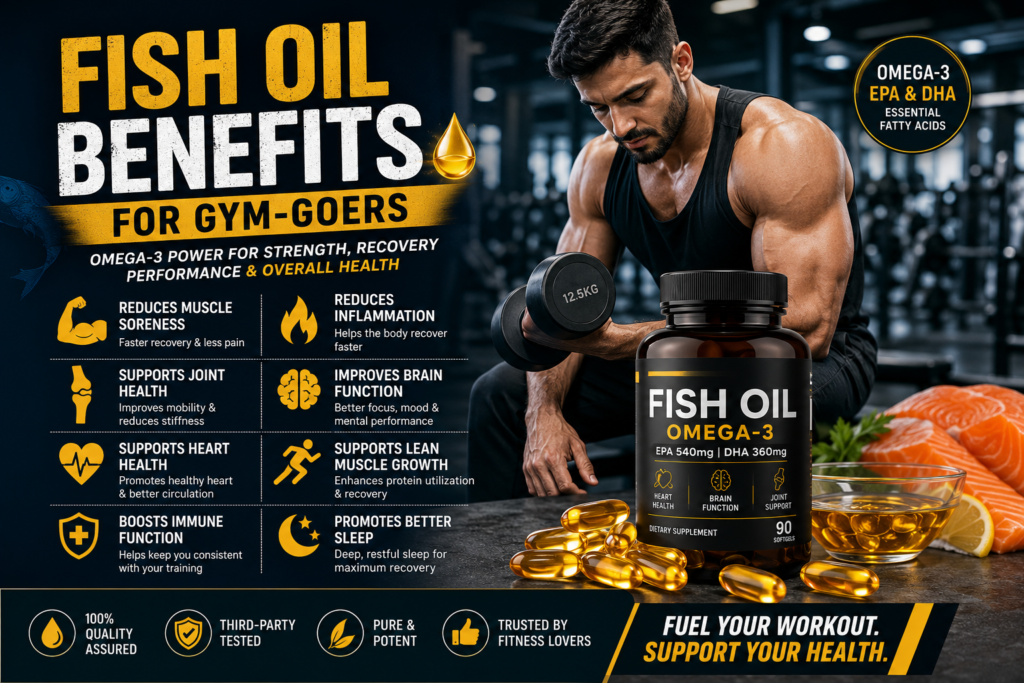
If you spend hours in the gym pushing your limits, your body needs more than just protein and carbohydrates. Healthy fats also play a vital role in muscle recovery, joint health, heart function, and overall athletic performance. One of the most popular and scientifically supported supplements is Fish Oil, which is rich in Omega-3 fatty acids (EPA and DHA).
Many gym-goers focus only on whey protein, creatine, and pre-workout while ignoring omega-3s. However, adding a quality fish oil supplement to your routine can significantly improve recovery, reduce inflammation, and support long-term health.
In this blog, we’ll explore the top fish oil benefits for gym-goers and why it deserves a place in your supplement stack.
What is Fish Oil?
Fish oil is extracted from fatty fish such as salmon, sardines, anchovies, and mackerel. It contains two important Omega-3 fatty acids:
- EPA (Eicosapentaenoic Acid) – Helps reduce inflammation and supports heart health.
- DHA (Docosahexaenoic Acid) – Supports brain function, vision, and nervous system health.
These healthy fats are difficult to obtain in sufficient amounts from a regular diet, especially if you don’t eat fish regularly.
1. Reduces Muscle Soreness
After an intense workout, your muscles experience tiny tears that cause soreness. This is a normal part of muscle growth, but excessive soreness can delay your next workout.
Fish oil’s anti-inflammatory properties help reduce muscle damage and soreness after resistance training.
Benefits
- Faster recovery
- Less muscle pain
- Improved training frequency
- Better workout consistency
This allows athletes to return to training sooner without compromising performance.
2. Supports Joint Health
Heavy lifting places significant stress on joints such as knees, shoulders, elbows, and wrists.
Omega-3 fatty acids help lubricate joints and reduce inflammation, making workouts more comfortable.
Especially beneficial for
- Powerlifters
- Bodybuilders
- CrossFit athletes
- Runners
- Older fitness enthusiasts
Healthy joints mean better movement and lower injury risk over time.
3. Helps Reduce Inflammation
Exercise naturally creates inflammation in muscles. While some inflammation is necessary for growth, excessive inflammation can slow recovery and increase fatigue.
Fish oil helps maintain a healthy inflammatory response without eliminating the body’s natural recovery process.
This leads to:
- Better recovery
- Improved mobility
- Less stiffness
- Reduced fatigue
4. Supports Heart Health
Your heart works harder during exercise, making cardiovascular health essential for athletic performance.
Omega-3 fatty acids may help support:
- Healthy blood circulation
- Normal blood pressure
- Healthy triglyceride levels
- Overall cardiovascular function
A healthy heart improves endurance and workout performance.
5. Improves Brain Function and Focus
Training isn’t only physical—it requires concentration and mental discipline.
DHA is one of the major structural fats found in the brain.
Fish oil may help support:
- Mental focus
- Better concentration
- Improved reaction time
- Mood balance
- Reduced mental fatigue
This can be particularly helpful before intense training sessions.
6. Supports Lean Muscle Growth
Fish oil is not a muscle-building supplement like protein or creatine.
However, it may support muscle growth indirectly by:
- Improving recovery
- Enhancing protein synthesis response
- Reducing inflammation
- Helping maintain muscle during calorie deficits
When combined with proper nutrition and resistance training, fish oil can contribute to better overall progress.
7. Helps During Fat Loss
During a cutting phase, your body experiences additional stress due to reduced calorie intake.
Fish oil can support fat-loss programs by helping maintain:
- Energy levels
- Joint comfort
- Recovery
- Muscle preservation
Some research also suggests omega-3s may support healthy metabolism when combined with exercise and a balanced diet.
8. Improves Mobility
Inflamed muscles and stiff joints often reduce flexibility.
Fish oil may improve:
- Range of motion
- Joint comfort
- Exercise quality
- Athletic performance
Better mobility also reduces injury risk during compound exercises like squats and deadlifts.
9. Supports Immune Health
Hard training can temporarily stress the immune system.
Omega-3 fatty acids help support normal immune function, making it easier to stay consistent with your training schedule.
A healthy immune system means fewer interruptions in your fitness journey.
10. Promotes Better Sleep Recovery
Recovery doesn’t happen in the gym—it happens while you sleep.
Some evidence suggests that omega-3 fatty acids may support healthy sleep quality, allowing muscles more time to repair and recover.
Better sleep equals:
- Better recovery
- Improved energy
- Better performance
- Enhanced muscle growth
How Much Fish Oil Should Gym-Goers Take?
The ideal dosage depends on your diet and health goals.
A common recommendation is:
- 1,000–2,000 mg of combined EPA + DHA daily
Always follow the serving size on the product label or consult a healthcare professional if you have medical conditions or take blood-thinning medications.
Best Time to Take Fish Oil
Fish oil can be taken at any time of the day.
Many people prefer taking it:
- With breakfast
- With lunch
- With dinner
Taking fish oil alongside a meal containing healthy fats may improve absorption and reduce the chance of a fishy aftertaste.
Can You Take Fish Oil with Other Supplements?
Yes. Fish oil works well with most common fitness supplements, including:
- Whey Protein
- Creatine Monohydrate
- Multivitamins
- Vitamin D3
- Magnesium
- Pre-Workout
- BCAA
- Electrolytes
These supplements complement each other and support different aspects of performance and recovery.
Who Should Consider Fish Oil?
Fish oil is suitable for:
- Bodybuilders
- Gym beginners
- Athletes
- Weight-loss enthusiasts
- Powerlifters
- CrossFit athletes
- Runners
- People who rarely eat fish
Choosing a Quality Fish Oil
When purchasing fish oil, look for:
- High EPA and DHA content
- Third-party quality testing
- Low heavy metal contamination
- Fresh, odor-controlled capsules
- Reputable brand with transparent labeling
Quality matters more than simply choosing the cheapest option.
Are There Any Side Effects?
Fish oil is generally well tolerated when used as directed.
Some people may experience:
- Mild fishy burps
- Upset stomach
- Nausea (if taken on an empty stomach)
Taking it with meals often minimizes these effects.
Final Thoughts
Fish oil may not provide the immediate energy of a pre-workout or the noticeable muscle pump of creatine, but it offers long-term benefits that every gym-goer can appreciate. From reducing muscle soreness and supporting joint health to promoting heart function, brain health, and recovery, Omega-3 fatty acids are a valuable addition to a well-rounded fitness routine.
When paired with regular strength training, balanced nutrition, quality sleep, and consistent hydration, fish oil can help you train smarter, recover faster, and stay active for years to come.
If you’re looking to build a complete supplement stack, consider adding a high-quality fish oil alongside your protein, creatine, and multivitamin to support both your performance and overall wellness.