
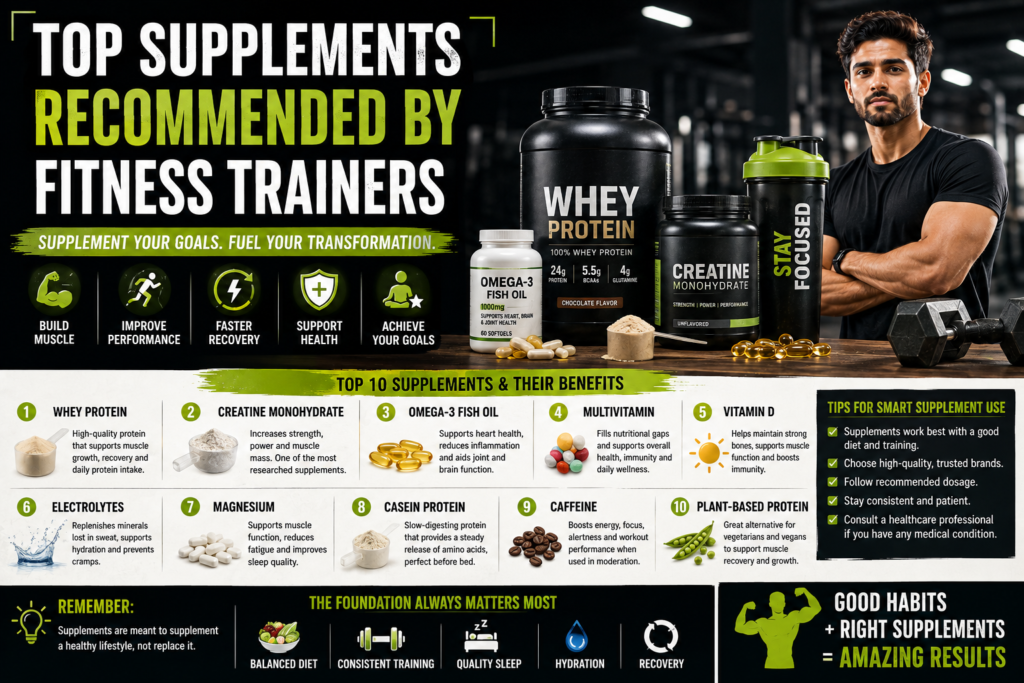
Supplements have become a popular part of many fitness routines, helping people support muscle growth, improve workout performance, recover faster, and meet their daily nutritional needs. However, it’s important to understand that supplements are exactly what their name suggests—a supplement to a balanced diet, not a replacement for healthy eating.
Most certified fitness trainers recommend focusing first on proper nutrition, consistent exercise, adequate sleep, and hydration. Once these basics are in place, certain supplements may provide additional benefits depending on your fitness goals.
In this guide, we’ll explore some of the most commonly recommended supplements, their benefits, and who may benefit from using them.
1. Whey Protein
Whey protein is one of the most popular and well-researched fitness supplements. It is a complete protein containing all nine essential amino acids and is quickly absorbed by the body.
Benefits
- Supports muscle recovery after workouts
- Helps build and maintain lean muscle
- Convenient way to increase daily protein intake
- Promotes satiety, which may help with weight management
Best For
- Gym beginners
- Strength athletes
- Busy professionals
- People who struggle to meet protein needs through food
Recommended Timing
After a workout or anytime during the day to help meet your daily protein target.
2. Creatine Monohydrate
Creatine is one of the most extensively studied sports supplements and is widely recommended for improving high-intensity exercise performance.
Benefits
- Improves strength and power output
- Supports muscle growth when combined with resistance training
- May enhance recovery between intense exercise sessions
Best For
- Weightlifters
- Powerlifters
- Sprinters
- Athletes performing repeated high-intensity efforts
Recommended Timing
Daily use is more important than the exact timing. Many people take it after workouts with water or a meal.
3. Omega-3 Fish Oil
Omega-3 fatty acids are important fats that support overall health.
Benefits
- Supports heart health
- Helps maintain normal brain function
- Supports joint health
- May help reduce exercise-related inflammation
Best For
People who eat little or no oily fish in their regular diet.
4. Multivitamin
A multivitamin helps fill nutritional gaps but should not replace fruits, vegetables, and whole foods.
Benefits
- Supports overall wellness
- Helps maintain normal immune function
- Provides essential vitamins and minerals
Best For
People with limited or unbalanced diets or increased nutrient needs.
5. Vitamin D
Vitamin D plays an important role in bone health, muscle function, and immune health.
Benefits
- Supports healthy bones
- Supports muscle function
- Helps maintain immune health
Best For
People with low sun exposure or those advised by a healthcare professional that they have low vitamin D levels.
6. Electrolytes
Electrolytes such as sodium, potassium, and magnesium help maintain fluid balance and muscle function.
Benefits
- Replaces minerals lost through sweat
- Supports hydration
- Helps maintain muscle function during prolonged exercise
Best For
Endurance athletes or those exercising for long periods in hot conditions.
7. Magnesium
Magnesium is involved in hundreds of processes in the body.
Benefits
- Supports normal muscle function
- Helps reduce tiredness and fatigue when intake is adequate
- Supports sleep quality in some people
Best For
People whose diets are low in magnesium-rich foods or who have increased needs.
8. Casein Protein
Casein is a slow-digesting milk protein.
Benefits
- Provides a steady release of amino acids
- Supports overnight muscle recovery
- Helps increase daily protein intake
Best For
Individuals looking for a slow-digesting protein source, especially between meals or before bedtime.
9. Caffeine
Caffeine is one of the most widely used performance-enhancing ingredients.
Benefits
- Improves alertness
- Helps reduce the perception of fatigue
- May improve exercise performance in some people
Best For
People who tolerate caffeine well before training.
Avoid excessive intake, especially late in the day, as it may interfere with sleep.
10. Plant-Based Protein
Plant proteins made from pea, soy, rice, or blended sources are suitable alternatives for those who avoid dairy.
Benefits
- Supports muscle recovery
- Helps meet protein needs
- Suitable for vegetarians and vegans
Best For
Anyone following a plant-based diet.
Supplements That May Not Be Necessary
Not every popular supplement is essential. Many products are heavily marketed despite limited evidence for significant benefits.
Examples include:
- Fat burners
- Testosterone boosters
- Detox supplements
- Proprietary pre-workout blends with undisclosed ingredient amounts
Always evaluate products carefully and choose reputable brands.
Tips for Choosing Quality Supplements
When selecting supplements:
- Buy from trusted brands.
- Read the ingredient list carefully.
- Avoid products with exaggerated claims.
- Check expiry dates.
- Follow the recommended serving size.
- Consult a healthcare professional if you have a medical condition, are pregnant, or take prescription medications.
Can You Build Muscle Without Supplements?
Yes. Many people successfully build muscle and improve fitness through:
- Progressive strength training
- Adequate protein from whole foods
- Balanced nutrition
- Quality sleep
- Consistent exercise
- Proper hydration
Supplements can be convenient but are not a requirement for making progress.
Sample Beginner Supplement Plan
Morning
- Balanced breakfast
- Multivitamin (if appropriate)
Before Workout
- Water
- Optional coffee if tolerated
After Workout
- Whey or plant protein if needed to meet daily protein goals
Throughout the Day
- Plenty of water
- Balanced meals rich in protein, vegetables, fruits, and whole grains
Evening
- Omega-3 (if appropriate)
- Magnesium (if advised by a healthcare professional)
Final Thoughts
Supplements can support your fitness journey, but they work best when combined with a healthy lifestyle. Whey protein, creatine monohydrate, omega-3 fish oil, multivitamins, vitamin D, electrolytes, magnesium, casein, caffeine, and plant-based proteins are among the most commonly recommended options because they have relatively strong evidence for specific uses.
Remember, supplements cannot replace consistent training, balanced nutrition, quality sleep, and proper recovery. Before adding any supplement to your routine, consider your individual goals, dietary intake, and health status. If you have any medical conditions or take medications, consult a qualified healthcare professional before starting a new supplement.
With the right approach, supplements can complement—not replace—the fundamentals of a healthy fitness lifestyle.