
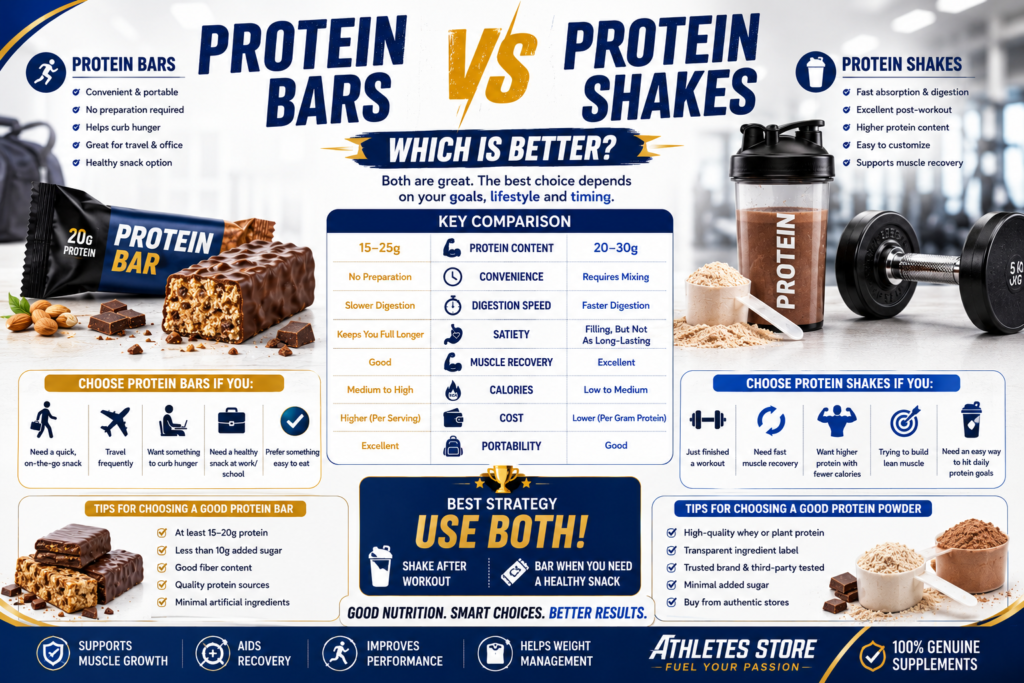
Protein is one of the most important nutrients for anyone looking to build muscle, improve recovery, lose weight, or maintain overall health. While whole foods should always be your primary source of protein, busy lifestyles often make it difficult to meet daily protein requirements through meals alone. This is where protein supplements come in.
Among the most popular options are protein bars and protein shakes. Both are convenient, portable, and designed to increase your daily protein intake. But which one is actually better? The answer depends on your fitness goals, lifestyle, and nutritional needs.
In this blog, we’ll compare protein bars and protein shakes in detail, including their benefits, drawbacks, nutritional value, and the best situations to use each.
What Are Protein Bars?
Protein bars are ready-to-eat snack bars that contain a higher amount of protein than regular snack bars. They often include ingredients like whey protein, milk protein, soy protein, oats, nuts, seeds, and dried fruits.
Most protein bars provide 15–25 grams of protein per serving, making them a convenient option when you’re on the go.
Benefits of Protein Bars
- Easy to carry anywhere
- No preparation required
- Helps reduce hunger
- Great for travel or office
- Can replace unhealthy snacks
- Supports daily protein intake
Protein bars are especially useful for people with busy schedules who need a quick and nutritious snack.
What Are Protein Shakes?
Protein shakes are beverages made by mixing protein powder with water, milk, or a plant-based drink. Whey protein is the most popular choice, but plant-based and casein protein powders are also widely available.
A typical protein shake provides 20–30 grams of protein per serving with relatively few carbohydrates and fats.
Benefits of Protein Shakes
- Fast digestion and absorption
- Excellent post-workout nutrition
- Easy to customize
- Higher protein content
- Low in calories (depending on ingredients)
- Supports muscle recovery
Protein shakes are one of the most effective ways to increase protein intake after exercise.
Protein Bars vs Protein Shakes: Comparison
1. Protein Content
Most protein shakes contain slightly more protein than protein bars.
Protein Bar
- 15–25g protein
Protein Shake
- 20–30g protein
Winner: Protein Shakes
2. Convenience
Protein bars require no mixing, refrigeration, or preparation.
Protein shakes require a shaker bottle or blender unless they’re pre-made.
Winner: Protein Bars
3. Digestion Speed
Protein shakes, especially whey protein, digest much faster than protein bars.
This makes shakes ideal immediately after workouts.
Protein bars digest more slowly because they often contain fiber and healthy fats.
Winner: Protein Shakes
4. Satiety
Protein bars usually contain more fiber and carbohydrates, helping you stay full for longer.
Protein shakes are filling but generally don’t satisfy hunger as long as bars.
Winner: Protein Bars
5. Muscle Recovery
After resistance training, muscles benefit from quickly absorbed protein.
Protein shakes deliver amino acids faster, supporting muscle repair and recovery.
Winner: Protein Shakes
6. Weight Loss
Both products can support weight loss when used as part of a calorie-controlled diet.
Protein bars can help reduce cravings between meals.
Protein shakes provide high protein with fewer calories.
Choose wisely by reading nutrition labels.
Winner: Tie
7. Cost
Protein powder generally offers more servings and lower cost per gram of protein compared to protein bars.
Winner: Protein Shakes
Nutritional Comparison
| Feature | Protein Bar | Protein Shake |
|---|---|---|
| Protein | 15–25g | 20–30g |
| Calories | 180–300 | 100–180 |
| Carbohydrates | Medium to High | Usually Low |
| Fat | Medium | Low |
| Fiber | High | Low |
| Convenience | Excellent | Good |
| Muscle Recovery | Good | Excellent |
| Hunger Control | Excellent | Good |
When Should You Choose a Protein Bar?
Protein bars are ideal if you:
- Need a quick snack at work or college
- Travel frequently
- Want something portable
- Need to satisfy hunger between meals
- Want a healthier alternative to chocolates or chips
Protein bars are also helpful before long meetings, road trips, or when you don’t have time to prepare food.
When Should You Choose a Protein Shake?
Protein shakes are better if you:
- Finish a gym workout
- Need fast muscle recovery
- Want higher protein with fewer calories
- Are trying to build lean muscle
- Find it difficult to meet daily protein needs
Protein shakes are especially effective within one to two hours after exercise.
Can You Use Both?
Absolutely.
Many fitness enthusiasts use both depending on the situation.
For example:
Morning
Healthy breakfast with eggs and oats.
Afternoon
Protein bar as a healthy snack.
After Workout
Protein shake with whey protein.
This combination provides convenience while helping you meet your daily protein goals.
Tips for Choosing a Good Protein Bar
Not all protein bars are equally nutritious.
Look for:
- At least 15–20g protein
- Less than 10g added sugar
- Good fiber content
- Quality protein sources
- Minimal artificial ingredients
Avoid bars that contain excessive sugar, hydrogenated oils, or unnecessary fillers.
Tips for Choosing a Good Protein Powder
Choose products that:
- Contain high-quality whey or plant protein
- Have transparent ingredient labels
- Come from trusted brands
- Are third-party tested
- Have minimal added sugar
Always purchase supplements from reliable stores to ensure authenticity.
Common Myths
Myth 1: Protein Bars Are Candy
Not all protein bars are unhealthy. Many provide balanced nutrition and can be a smart snack choice when selected carefully.
Myth 2: Protein Shakes Replace Meals
Protein shakes are supplements. While they can be part of a meal, they shouldn’t replace a balanced diet on a regular basis.
Myth 3: More Protein Is Always Better
Consuming more protein than your body needs doesn’t automatically lead to more muscle. Pair adequate protein with strength training, proper nutrition, and recovery for the best results.
Which One Is Better for Beginners?
If you’re new to fitness:
- Choose a protein shake if your goal is muscle building, strength, or post-workout recovery.
- Choose a protein bar if you need a convenient, high-protein snack during a busy day.
Both can fit into a healthy diet when used appropriately.
Final Thoughts
When comparing protein bars vs protein shakes, there isn’t a single winner because each serves a different purpose. Protein shakes are generally the better choice for muscle recovery, lean muscle growth, and cost-effective protein intake. Their fast absorption makes them ideal after workouts and for meeting daily protein requirements.
Protein bars, on the other hand, excel in convenience. They’re perfect for busy professionals, students, travelers, and anyone who needs a satisfying, protein-rich snack without any preparation.
The best option depends on your lifestyle and fitness goals. If possible, keep both available—use a protein shake after training and a protein bar when you need a quick, nutritious snack. Combined with a balanced diet, regular exercise, proper hydration, and quality sleep, either option can help you stay on track and reach your health and fitness goals.