
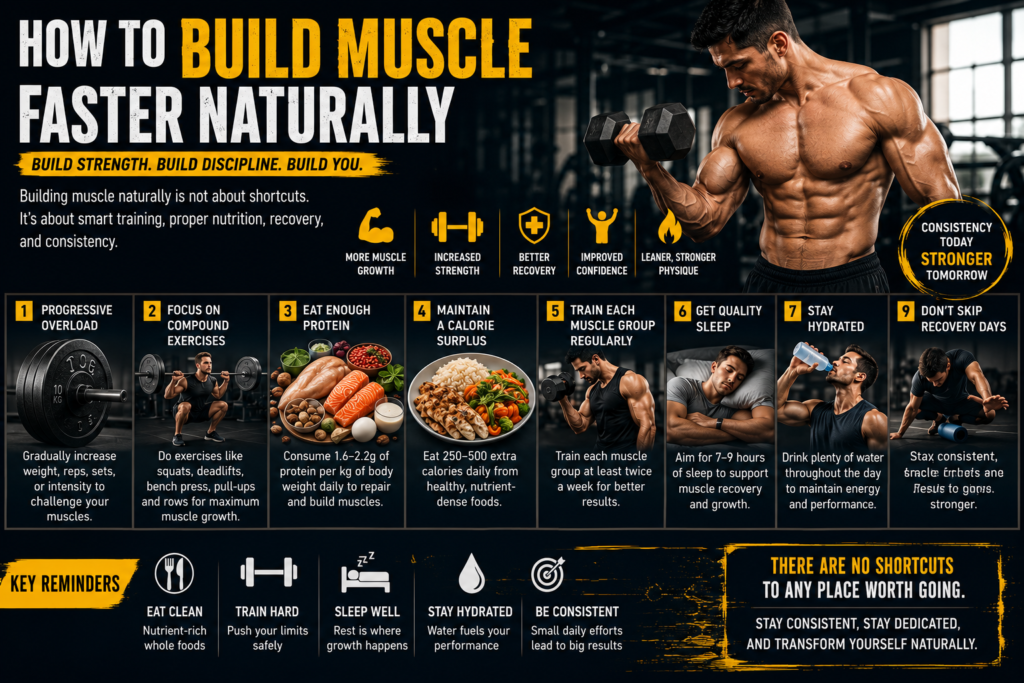
Building muscle is a common fitness goal for many people, whether they are beginners or experienced gym-goers. While supplements can support your fitness journey, the foundation of muscle growth always comes from proper training, nutrition, recovery, and consistency. The good news is that you can build muscle naturally and effectively by following proven strategies. In this blog, we will explore the best ways to build muscle faster without relying on shortcuts.
1. Focus on Progressive Overload
Progressive overload is one of the most important principles of muscle growth. It means gradually increasing the demands placed on your muscles over time. Your body adapts to stress, so if you continue lifting the same weight repeatedly, your progress may slow down.
You can apply progressive overload by:
- Increasing the weight you lift
- Performing more repetitions
- Adding extra sets
- Improving exercise intensity
- Reducing rest periods
Aim to challenge your muscles regularly while maintaining proper form and technique.
2. Prioritize Compound Exercises
Compound exercises work multiple muscle groups at the same time and are highly effective for building overall strength and muscle mass. These exercises allow you to lift heavier weights and stimulate more muscle fibers.
Some of the best compound exercises include:
- Squats
- Deadlifts
- Bench Press
- Pull-Ups
- Overhead Press
- Barbell Rows
Including these exercises in your workout routine can help you gain muscle faster than relying solely on isolation exercises.
3. Eat Enough Protein
Protein is the building block of muscles. During workouts, tiny muscle fibers break down and require protein to repair and grow stronger.
Good protein sources include:
- Eggs
- Chicken breast
- Fish
- Lean meat
- Milk and dairy products
- Paneer
- Greek yogurt
- Lentils and beans
- Soy products
Most active individuals should aim for approximately 1.6 to 2.2 grams of protein per kilogram of body weight daily. Spread your protein intake throughout the day for better muscle protein synthesis.
4. Maintain a Calorie Surplus
If your goal is muscle gain, your body needs extra energy to build new muscle tissue. This means consuming slightly more calories than you burn.
A healthy calorie surplus of 250–500 calories per day is usually sufficient for lean muscle growth. Focus on nutrient-dense foods rather than junk food.
Include:
- Whole grains
- Rice
- Oats
- Sweet potatoes
- Fruits
- Vegetables
- Healthy fats
- Protein-rich foods
A balanced diet ensures your body gets the nutrients needed for recovery and growth.
5. Train Each Muscle Group Regularly
Research shows that training each muscle group at least twice per week can be more effective for muscle growth than training it only once.
A simple workout split might include:
- Day 1: Chest and Triceps
- Day 2: Back and Biceps
- Day 3: Legs
- Day 4: Shoulders and Abs
- Day 5: Repeat or focus on weak areas
Consistency is more important than complicated workout plans.
6. Get Quality Sleep
Many people underestimate the importance of sleep for muscle growth. During sleep, your body releases growth hormone and repairs damaged muscle tissue.
Poor sleep can lead to:
- Slower recovery
- Reduced strength
- Increased fatigue
- Lower testosterone levels
Aim for 7–9 hours of quality sleep every night. Creating a regular sleep schedule can significantly improve muscle-building results.
7. Stay Hydrated
Water plays a crucial role in muscle function, nutrient transport, and recovery. Even mild dehydration can negatively affect workout performance.
Tips for proper hydration:
- Drink water throughout the day
- Consume water before, during, and after workouts
- Increase fluid intake during hot weather
Proper hydration helps maintain energy levels and supports muscle recovery.
8. Don’t Skip Recovery Days
Muscles do not grow while you are working out—they grow during recovery. Overtraining can increase injury risk and slow down progress.
Recovery strategies include:
- Taking rest days
- Stretching
- Light walking
- Foam rolling
- Adequate sleep
Listening to your body is essential for long-term success.
9. Manage Stress Levels
Chronic stress increases cortisol levels, which can interfere with muscle growth and recovery. High stress can also affect sleep quality and motivation.
Ways to reduce stress include:
- Meditation
- Deep breathing exercises
- Walking outdoors
- Yoga
- Spending time with family and friends
A healthy mind supports a healthy body.
10. Stay Consistent and Patient
Building muscle naturally takes time. Many people quit because they expect dramatic changes within a few weeks. Real muscle growth is a gradual process that rewards consistency.
Track your progress by:
- Taking photos
- Recording workout performance
- Monitoring body measurements
- Keeping a training journal
Small improvements each week can lead to impressive long-term results.
Conclusion
Building muscle faster naturally is possible when you combine smart training, proper nutrition, adequate recovery, and consistent effort. Focus on progressive overload, consume enough protein, maintain a calorie surplus, prioritize sleep, and stay hydrated. Avoid looking for shortcuts and trust the process.
Remember, the strongest and most sustainable physiques are built through discipline and patience. Stay committed to your fitness journey, and your muscles will grow stronger, bigger, and healthier over time.